
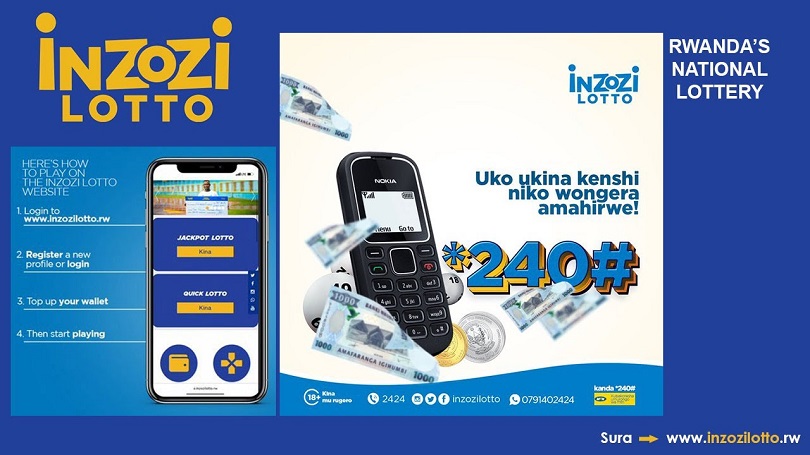
The Rwanda Development Board (RDB) has officially revoked Inzozi Lotto's license due to non-compliance with contractual terms, laws, and gaming regulations. The lottery provider cites fierce competition, market challenges, and financial losses among the reasons for their operational difficulties, but they now seek fairness and compliance with their agreement to re-enter the market.
In a statement, RDB announced: “The Rwanda Development Board (RDB), through the National Lottery and Gaming Commission (NLGC), informs the public that the license granted to Inzozi Lotto (Carousel Ltd) to operate the National Lottery has been revoked due to failure to adhere to contractual obligations, laws, and regulations governing the gaming sector. As of now, Inzozi Lotto is no longer authorized to operate the National Lottery in Rwanda.”
RDB also reassured the public, announcing that “lottery winners with valid proofs who have not been paid are advised that Inzozi Lotto still holds the responsibility to compensate them.” The entity further committed to overseeing the payment process.
Moreover, RDB emphasized its intention to identify a new partner to run the National Lottery while adhering to principles such as transparency and the protection of public interest. This brings an end to Inzozi Lotto's operations, which started in 2020 when Carousel Ltd was granted a five-year exclusive license. What went wrong for their journey to reach such an abrupt halt?
“We Were Starting to Experience Financial Losses”
During a press briefing on October 6, 2025, Patrick Kaka, Inzozi Lotto's Head of Commerce, revealed that the company made payments exceeding Rwf 600 million to the government since their launch, yet remained financially unviable. “Even though we made payments, Inzozi Lotto wasn’t generating profit,” explained Kaka.
He highlighted that despite their exclusive license agreement, other companies started offering similar lottery services. “We continued operating at a loss, while the government still demanded over Rwf 680 million from us. This scenario triggered conflicts on both sides,” he lamented.
Kaka further alleged that other entities were given licenses, disrupting their market share while they were still held accountable as the sole operators. “This dual standard created instability in the market and hurt our operations,” he explained.
Competing Lotteries “Created Market Confusion”
Kalisa Dylain Chris, Head of Marketing and Digital Operations at Inzozi Lotto, shared that overlapping operations with other lottery providers created market confusion among customers. “Our efforts were affected as some players thought we were responsible for results or prizes from other companies,” said Kalisa.
Kalisa disclosed that competitors, such as Tunga Pe, emerged frequently, further reducing Inzozi Lotto's market share and revenue. Moreover, the government's 20% share of profits and additional 15% prize taxation further strained their financial stability. “In 2023, we paid Rwf 640 million in revenues while complying with all set obligations, but competition and market overlaps eroded our operations,” he disclosed.
He also emphasized the destabilizing effects of new companies entering the market every six months, saying, “Their arrival discouraged us from fulfilling the financial obligations placed on us; it simply killed our confidence that the situation could improve.”
Eventually, Inzozi Lotto declined to pay an additional Rwf 640 million in revenues, citing their inability due to a lack of market stability.
“The Fallout Cost Us Rwf 3 Billion”
According to Carousel Ltd’s lawyer, Niyibiza Remmy, the company's suspension has caused significant financial harm. “This has inflicted a loss of Rwf 3 billion on the company while negative impacts continue to snowball,” stated Niyibiza.
Furthermore, he argued that the authority to rescind their license did not reside with the RDB but rather should have been coordinated with the Ministry of Sports. “The decision to terminate came prematurely and while mediation talks to resolve these issues were underway,” Niyibiza added.
Inzozi Lotto Seeks Justice
Despite the downturn, Inzozi Lotto is seeking to return to the lottery business with compliance to all regulations. “We are urging authorities to uphold the agreements made and ensure fairness so we can regain our place in the market,” stated Kaka.
He also emphasized the commitments outlined in their agreement with the Ministry of Sports, ensuring the company’s exclusivity for lottery operations. “We are puzzled as to why RDB issued the suspension letter when our agreement was signed with the Ministry of Sports,” he elaborated.
Kaka confirmed that failure to settle the Rwf 680 million liability was a result of uncertainty over market stabilizations and external disruptions. Nevertheless, Inzozi Lotto assured all obligations, including payments to prize winners, would be honored and employees' rights upheld.
Supporting National Sports Development
Initially, Inzozi Lotto was established as an initiative to bolster Rwanda’s sports industry, with 20% of its profits allocated to support sports development projects. Over five years, the company contributed Rwf 640 million to the government, though the returns on broader market impacts fell below expectations.
As RDB seeks a new partner for the National Lottery, questions linger over whether fairness and consistency will be achieved in the sector. For now, the void left by Inzozi Lotto represents a unique crossroad for Rwanda’s evolving lottery industry.
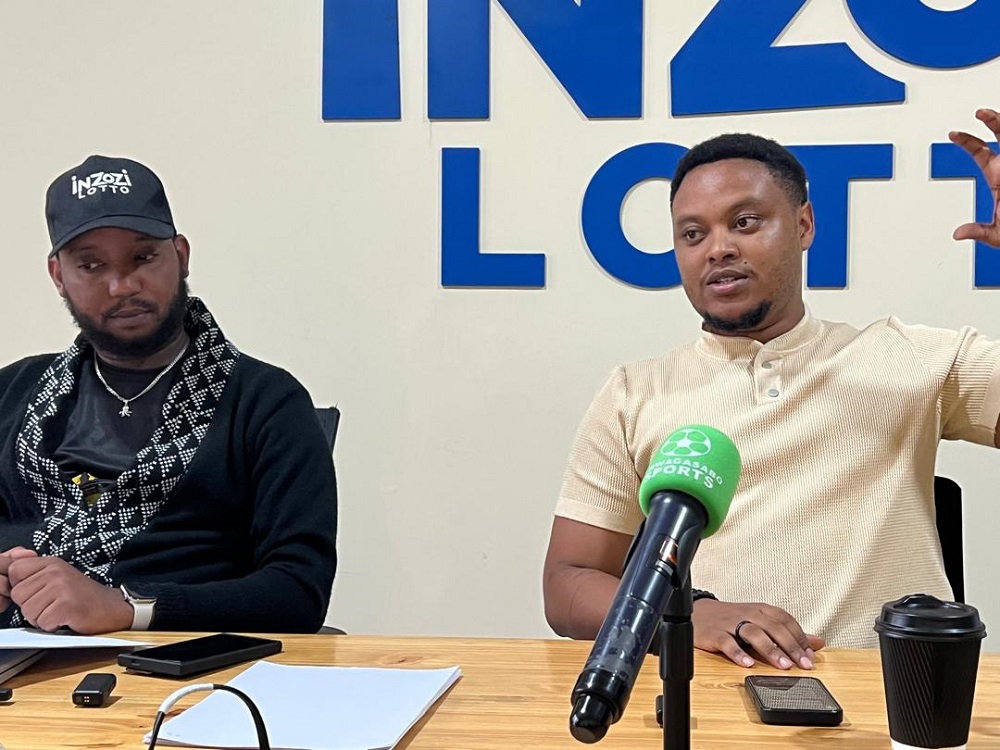
Patrick Kaka and Kalisa Dylain Chris of Inzozi Lotto expressed their concerns regarding fairness and the adherence to defined agreements during a media briefing.
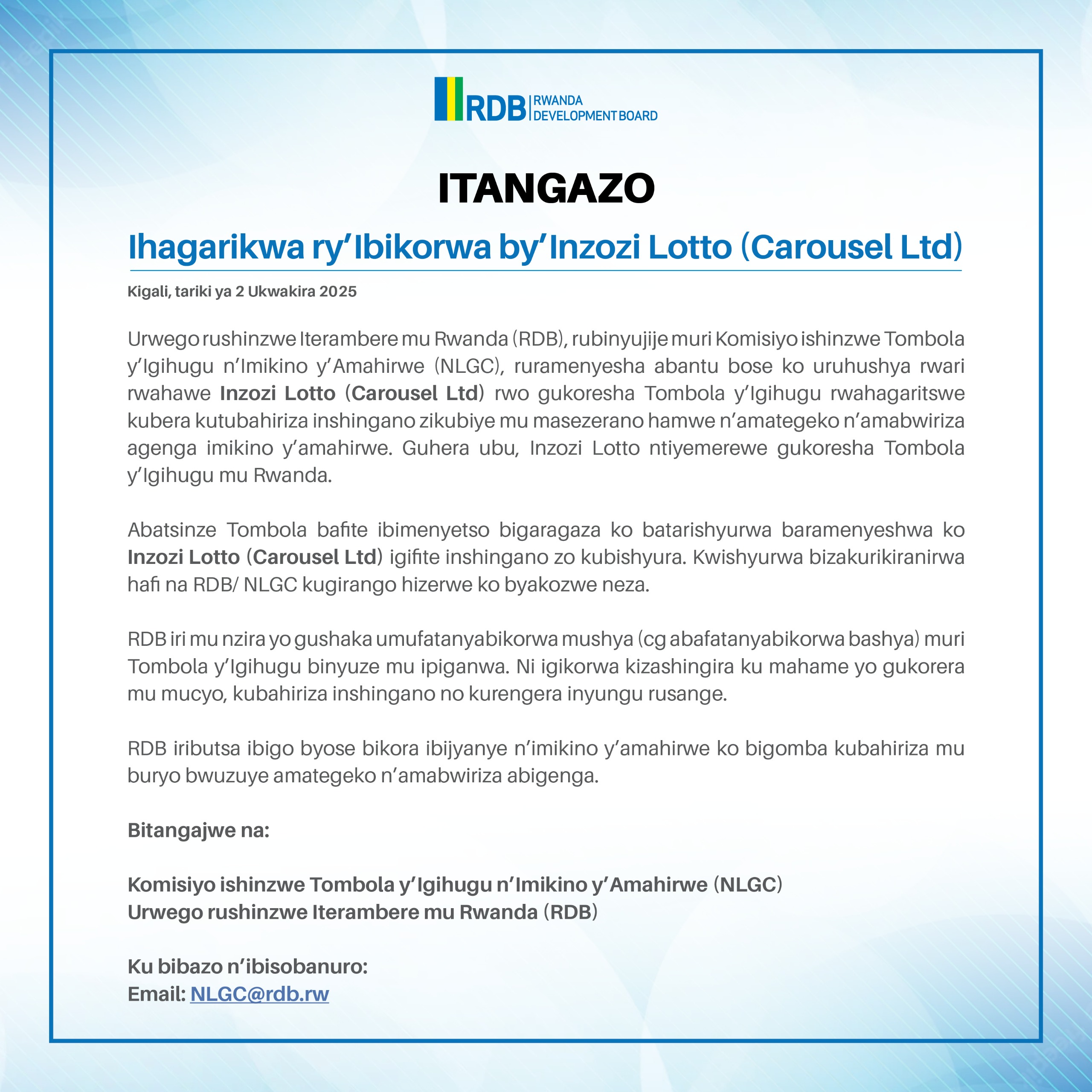
On October 2, 2025, RDB officially announced the suspension of Inzozi Lotto’s National Lottery license, ending their operations after five years.