

It is in this context that the Minister of National Unity and Civic Engagement, Dr. Jean Damascène Bizimana, has called on Rwandan artist Juno Kizigenza to stop using the nickname “Rutwitsi” in his artistic identity, citing the deep and painful historical meaning associated with the term in Rwanda’s past.
Minister Bizimana raised the issue on Wednesday, February 4, 2026, while responding to opinions from various members of the public—particularly young people—who questioned why the word “gutwika” (to burn) has been discouraged in party and concert language, despite being widely used today as a trendy expression symbolizing excitement, energy, or enjoyment.
In everyday life, the term “gutwika” has found its way into songs, film narration, concert promotions, advertising campaigns, and social media language. One of Rwanda’s major banks has even recently used the term in a marketing campaign encouraging customers to “gutwika.”
Among young people, the word is often viewed as harmless slang used to suggest that things are “on fire” or going well.
However, Dr. Bizimana emphasized that despite its modern usage, “gutwika” is not a neutral term in Rwanda’s history. On the contrary, it carries a deeply painful meaning, particularly during the 1959–1960 period, when homes of Tutsi families were burned across different parts of the country, especially in Bufundu, in what was then Gikongoro.
The minister made these remarks during a discussion with Senators on research related to the National Unity Index, stressing that young people must be taught the historical context and meaning of certain words before adopting them as entertainment slang.
He stated: “People should avoid using the word ‘gutwika’ at celebrations or concerts. ‘Gutwika’ means killing; it does not represent joy. Young people often do not know this.”
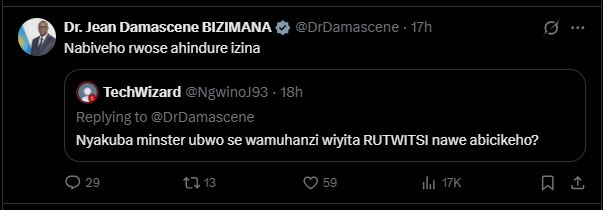
It was within this discussion that the issue of Juno Kizigenza and his nickname ‘Rutwitsi’ was raised. A user on X (formerly Twitter) asked Minister Bizimana whether the artist should also stop using the name, saying: “Honourable Minister, shouldn’t the artist who calls himself Rutwitsi also abandon that name?”
In response, Minister Bizimana agreed, stating clearly: “Yes, he should drop it and change the name.”
The nickname Rutwitsi has been widely used by Juno Kizigenza, especially in the opening lines of many of his songs, where he often sings, “Rutwitsi muzi.” For many fans, the name had become a signature element of his musical identity.
However, Minister Bizimana stressed that the Kinyarwanda language and its vocabulary should not be used carelessly, without regard for Rwanda’s history and values.
He said: “Those who think they can misuse the Kinyarwanda language based on their age or profession—using harmful words like ‘gutwika’ that have nothing to do with their intended message—are gravely mistaken.”
He highlighted three key points:
Destroying our shared national language is a serious offense that every Rwandan must avoid, regardless of status.
No Rwandan can build anything meaningful without grounding it in our culture, values, taboos, and history.
What has enabled Rwanda to endure through centuries is its culture and the value of unity, strongly reflected in the national language.
He further emphasized: “We are specifically talking about the word ‘gutwika.’ Its meaning is negative—it is not positive at all.”
While stage nicknames can help artists build a brand and attract fans, there is a need to carefully consider the impact and historical weight of the names and words they choose—especially in a country with a deeply sensitive history like Rwanda.
This discussion may encourage artists to reflect more deeply on their responsibility not only to entertain, but also to preserve language, history, and the values that promote national unity.

Minister Bizimana has called on Juno Kizigenza to change his stage nickname “Rutwitsi,” which he frequently uses in his artistic works.