
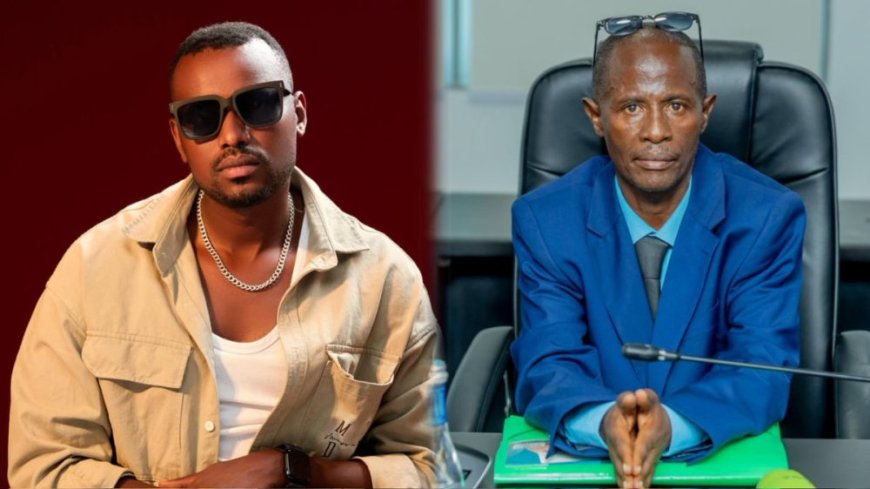
At 10:00 a.m., the presiding judge began calling the names of the appellants. However, when reading the list, he did not call Barafinda Ssekikubo Fred. The judge then asked those present whether they were ready to proceed, and they confirmed they were ready. Among them, only Nizeyimana Didier had legal representation.
They are accused of spreading false information, which led the prosecution to bring the case before the Kicukiro Primary Court. That court ruled that there were sufficient grounds to place them in pre-trial detention while investigations continued.
Tumukunde stated that his reason for appealing was that he was dissatisfied with the Kicukiro Primary Court’s decision, particularly because he had explained his family challenges and the fact that he is the primary breadwinner.
He explained that his mother suffers from mental health issues resulting from the 1994 Genocide against the Tutsi, and therefore requested to be released on bail so he could continue supporting his family while being tried outside detention.
Mazimpaka Patrick said his appeal was based on his skin disability, which makes prison conditions extremely difficult for him. He also mentioned that he has a wife and child who depend on him, as well as extended family responsibilities.
Nkeramihigo Japhet argued that the Primary Court failed to give proper consideration to the explanations he had provided. He stated that his wife is pregnant and due to give birth soon, and requested to be granted bail so he could support his family while awaiting trial.
Nizeyimana Didier, known as Muchoma, said he was not satisfied with the decision of the Kicukiro Primary Court, which he believes may have overlooked his innocence.
He said he had five grounds for appeal but elaborated on two. He explained that he came to Rwanda as an investor, opened a channel, hired staff, and appointed someone to oversee operations.
“I started the business without much experience, but the company performed well,” he said.
He stated that Saneza TV and Sana TV are business ventures and that he does not personally manage their daily operations. According to him, he was only aware of content before and after publication.
He added that the videos at the center of the case were recorded while he was in the United States, noting the time difference between Rwanda and the U.S., and that he works as a truck driver.
Upon learning that the videos had been uploaded to his YouTube channels, he said he was distressed and immediately removed them, regardless of the circumstances surrounding their publication.
His second ground of appeal was that he travels to Rwanda twice a year. He argued that if he had suspected any wrongdoing, he would not have returned voluntarily after allegedly committing an offense.
He said he has a family and business responsibilities and therefore requested to be released and tried while at liberty.
“I commit that whenever justice requires my presence, I will be there. My workplace is known. Truly, I am someone who contributes to this country,” he stated.
His lawyer argued that the appeal seeks to have the court consider legal provisions that empower a judge to reassess charges when the alleged acts do not correspond to the legal classification of the offense.
The Kicukiro Primary Court had previously justified Muchoma’s pre-trial detention partly on the grounds that he owns YouTube channels, which the defense argued was not sufficient reason.
The lawyer further stated that there is no extraordinary investigation pending that would require his client’s continued detention, as the evidence is already available and he would not interfere with the process.
The prosecution, however, relied on Article 66 of the Code of Criminal Procedure, emphasizing that the alleged offense carries a sentence exceeding two years. They maintained that the Primary Court’s decision was sound and requested that it be upheld.
Mazimpaka Patrick added that another reason for granting him release is that the alleged offense is individual in nature.
“The person who made those statements should be the one held accountable. I was only a moderator; not a single word criticizing the country came from my mouth,” he said.
He explained that his role was to host interviews, after which the content would be edited and uploaded by others, over whom he had no control.
Nkeramihigo Japhet, who was responsible for filming, said he performed that technical role while also working as a media teacher. He clarified that the media platform does not belong to him; he simply recorded what he was assigned to film. He previously taught videography at Kayenzi Spring College in Kamonyi District.
Muchoma added that he was arrested after being summoned, that he respected the appointed time and waited as instructed. He argued that if he had intended to flee, he would not have appeared voluntarily. He also expressed regret over the damage to his channels’ reputation, stating that they were originally created for entertainment and that he does not know how they shifted into political content.
After the appellants presented their arguments, attendees expected Barafinda Ssekikubo Fred to be called to plead as well. However, the judge announced that the hearing had concluded and immediately left the courtroom.
The court’s decision will be delivered on March 9, 2026, at 3:00 p.m.