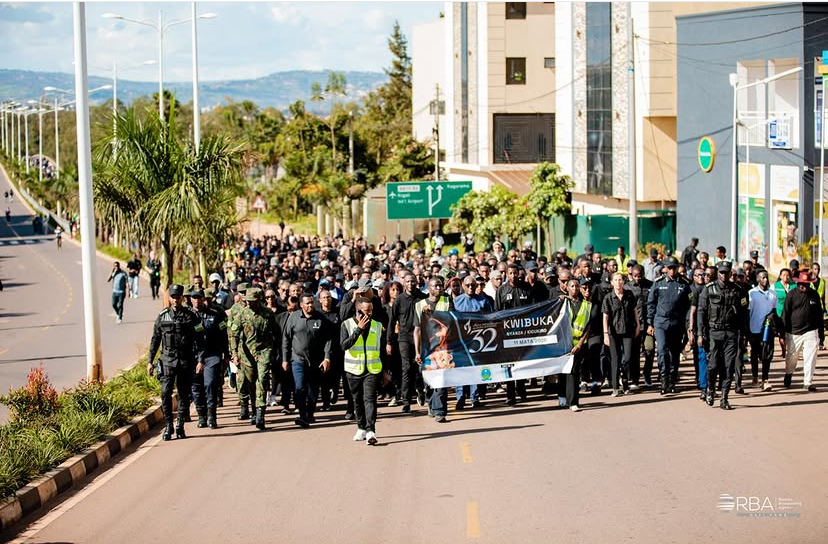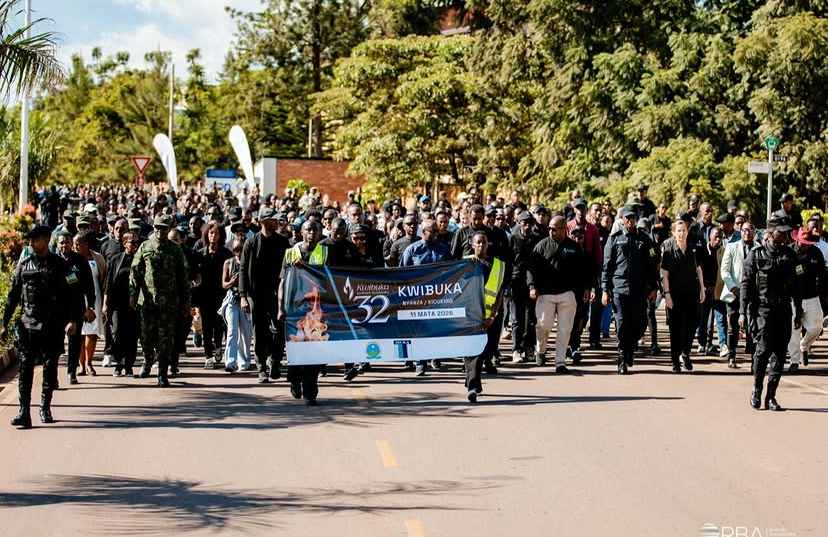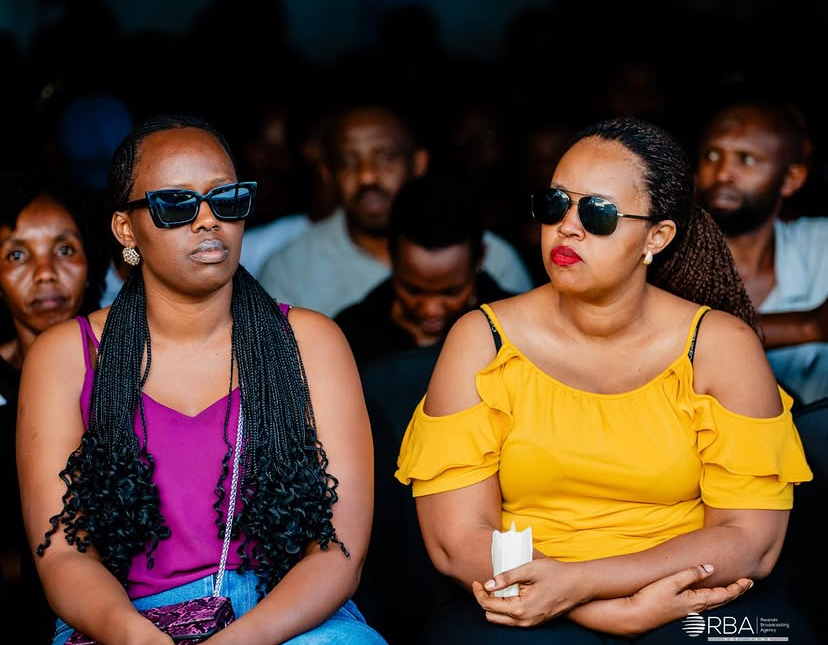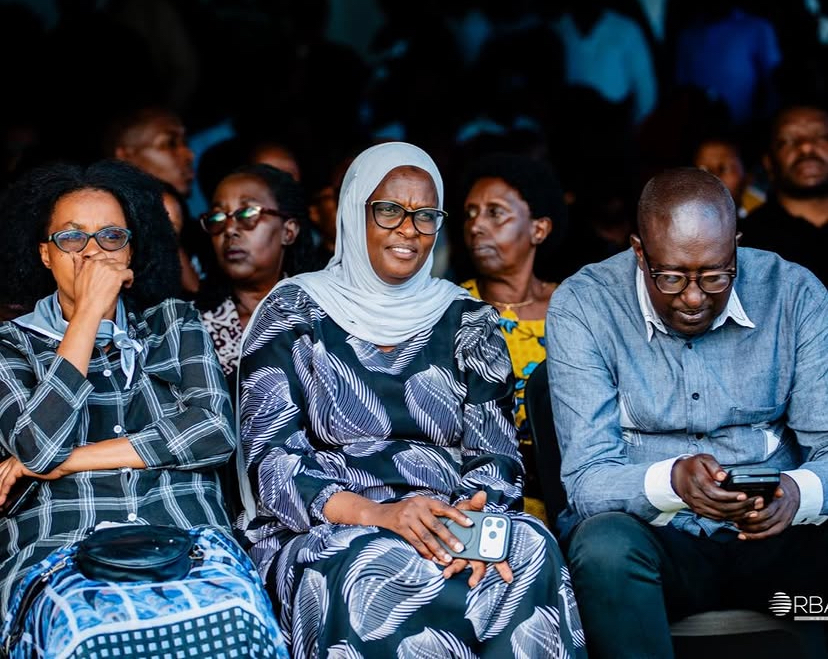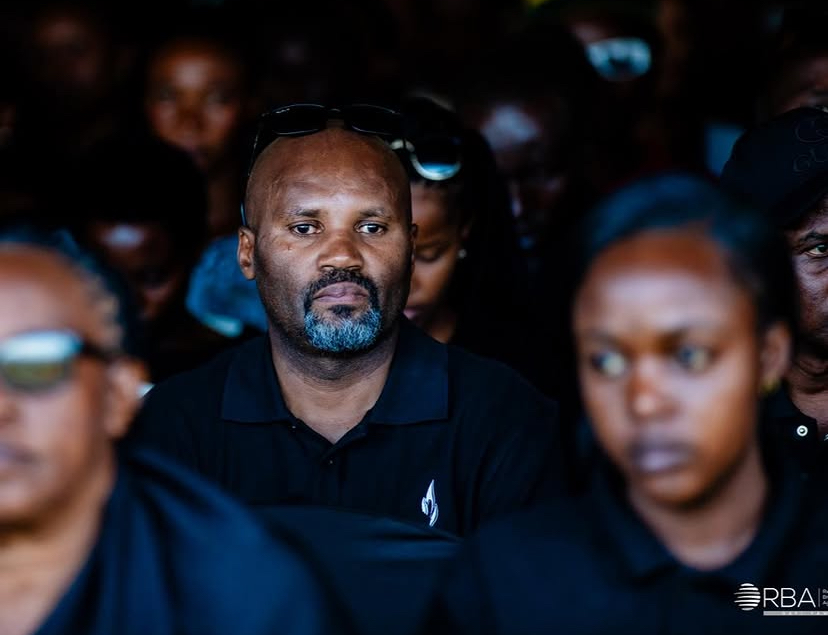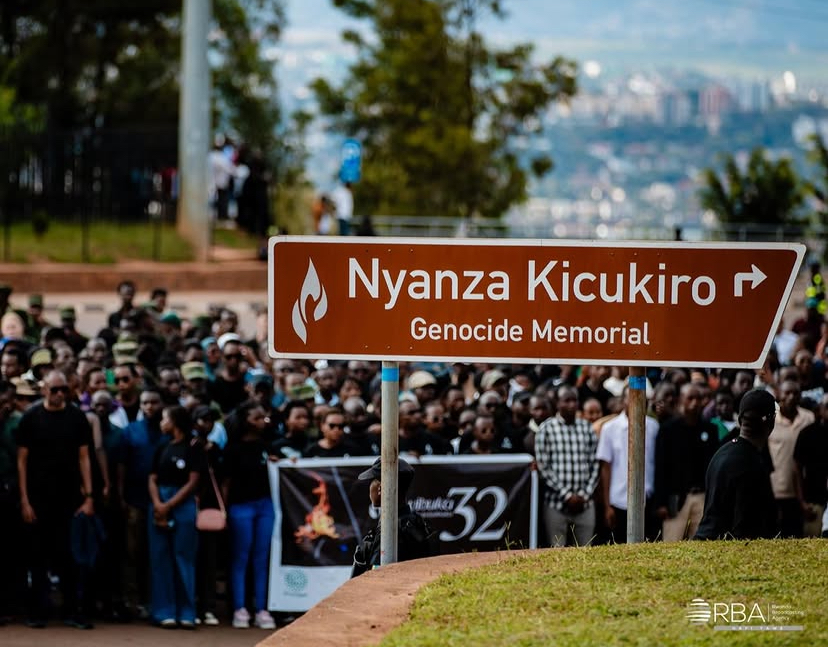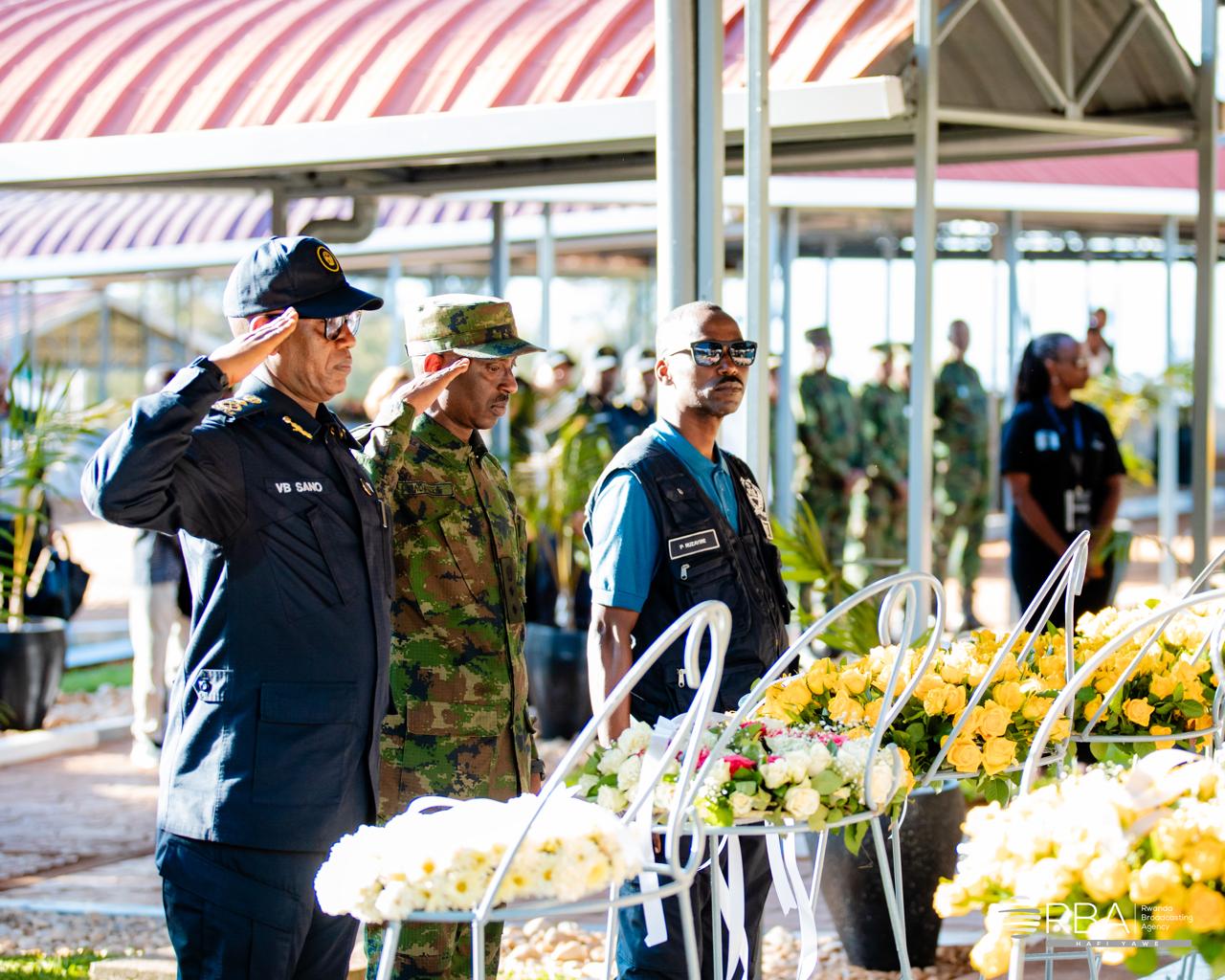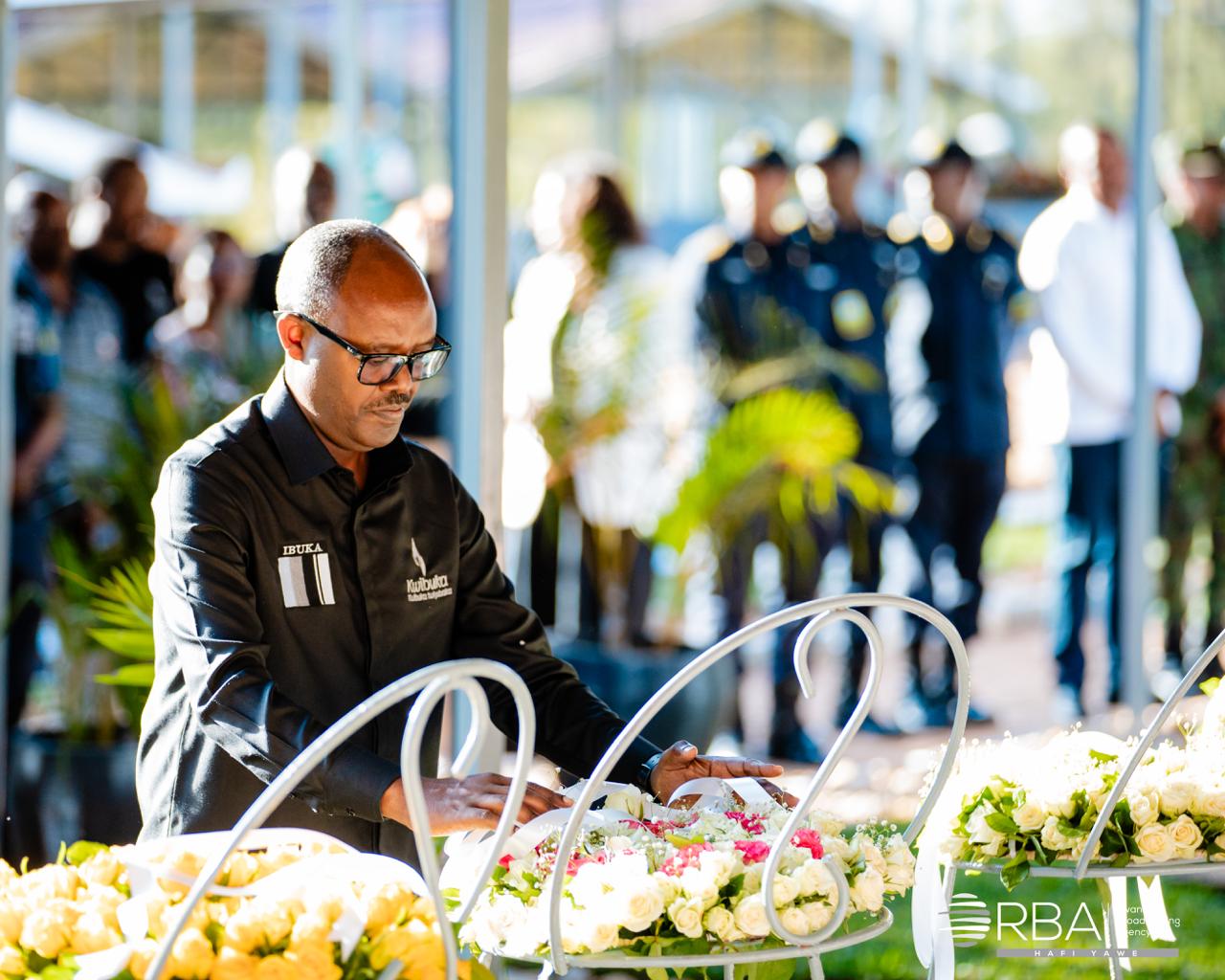

He made the remarks on Saturday during the 32nd commemoration of the 1994 Genocide against the Tutsi, held at the Nyanza Genocide Memorial. The event brought together thousands of residents from across Kigali to honor victims, particularly those killed in Nyanza after being abandoned by Belgian UN peacekeepers.
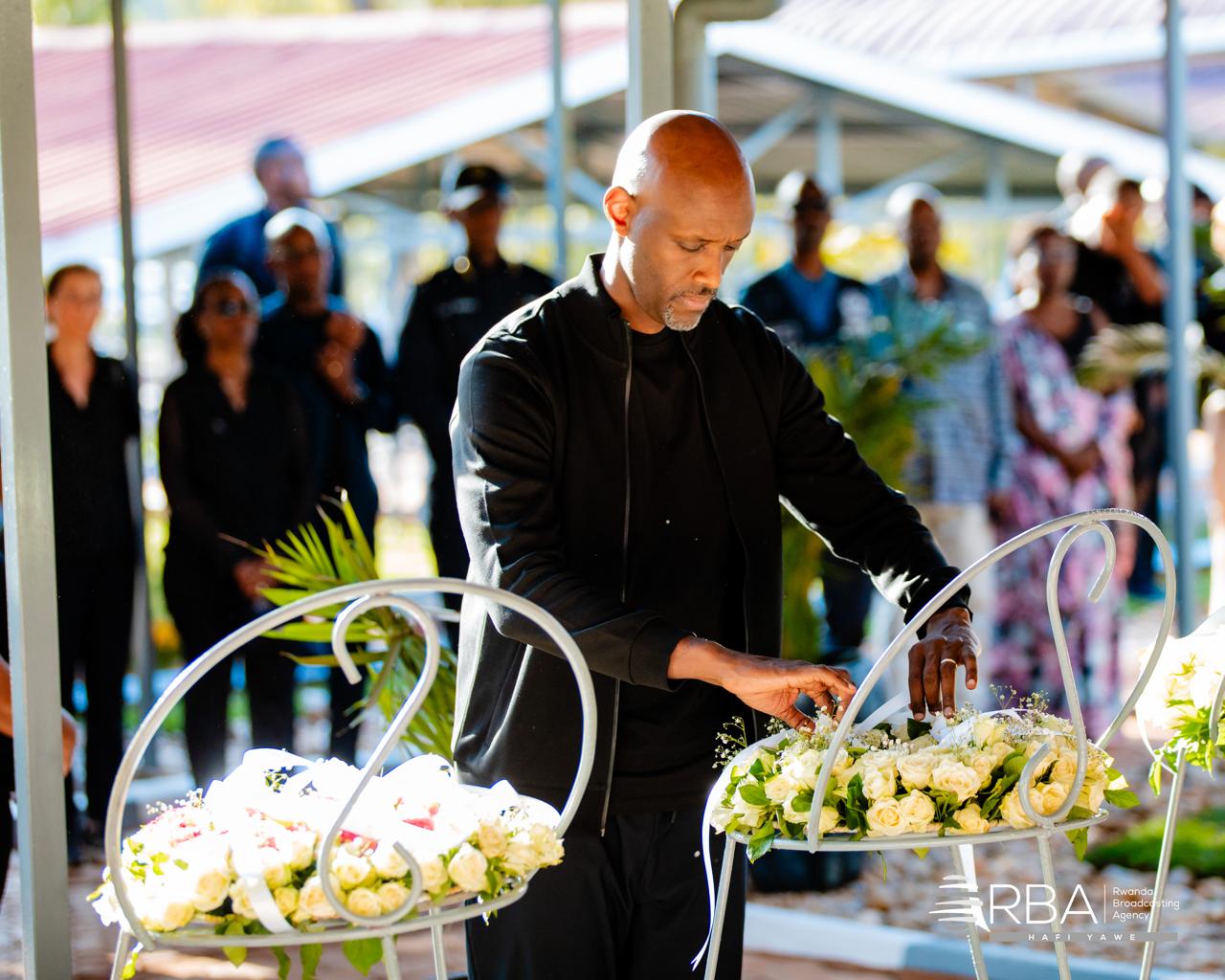
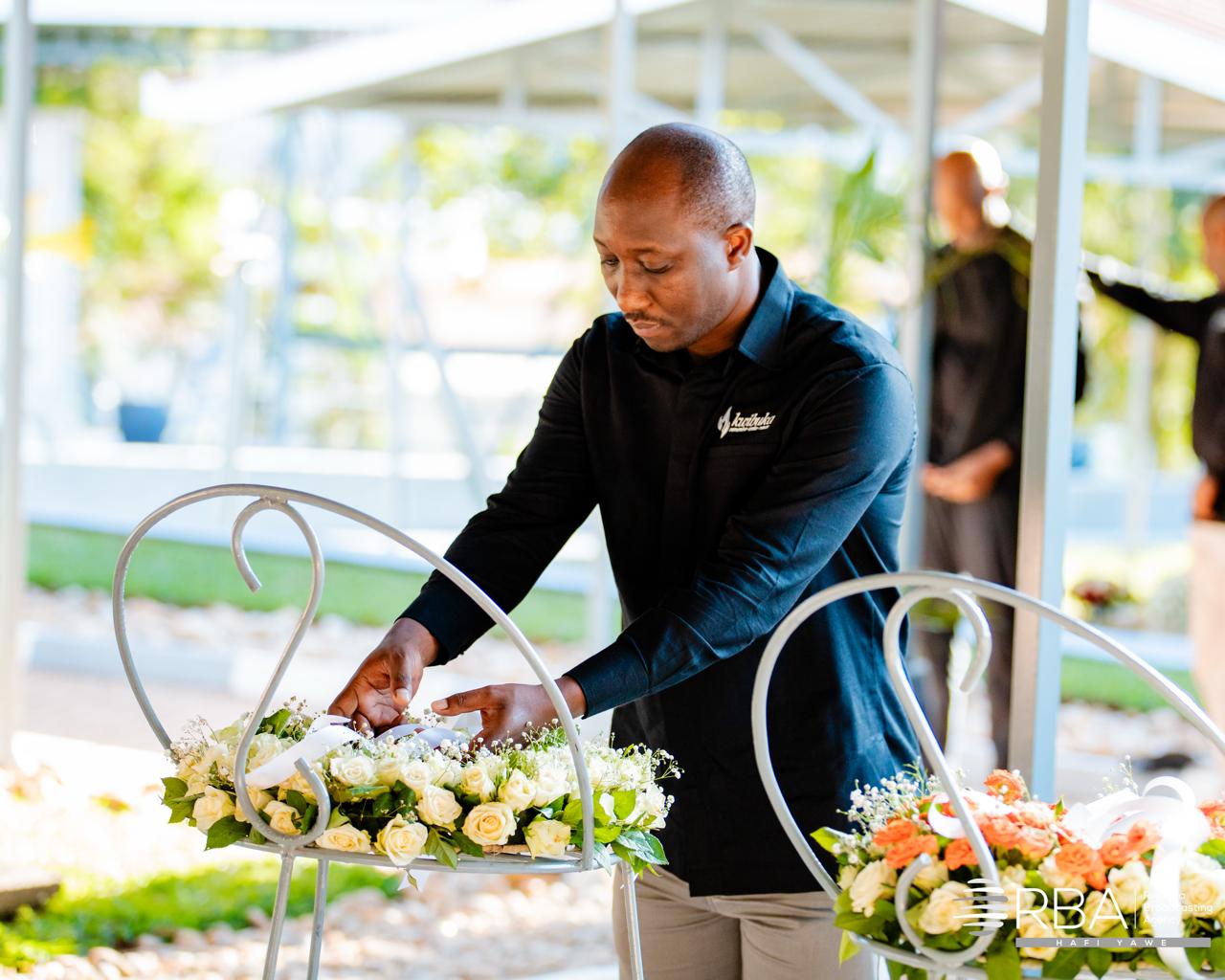
The commemoration followed a Walk to Remember that started at the former ETO Kicukiro (Ecole Technique Officielle) and ended at the memorial, where leaders and genocide survivors’ organizations laid wreaths and paid tribute to the victims laid to rest there.
During the event, survivor Muteteri Béatha shared a testimony of how she survived the 1994 Genocide against the Tutsi, recalling that persecution against her family had started long before 1994.
She said: “Before the Genocide against the Tutsi, we were not living in peace in Kagarama. We were constantly persecuted and could not sleep at home every night due to insecurity. From 1990 to 1993, our parents lived in fear.
At that time, one of my parents worked at BRALIRWA. On his way back from work, Interahamwe militia broke his arm, accusing him of having a son who had joined the Inkotanyi. He later died with that injury.”
She further recounted how they were later taken to Nyanza hill in Kicukiro, where they were meant to be killed. Grenades were thrown at them, and those who survived were attacked by Interahamwe militia.
“In the morning, I saw people I knew—our mothers—lying among the dead bodies, and there was nothing I could do. When the Interahamwe returned, we hid under the bodies. I told myself I would not run again. They came from Bugesera, walking over the bodies,” she said.
She added that she survived from that very place and expressed gratitude to the Inkotanyi who ultimately saved her life.
Minister Nduhungirehe noted that the day is significant as it commemorates more than 105,000 victims buried at the Nyanza Genocide Memorial, including over 3,000 who were killed on April 11, 1994, after being removed from ETO Kicukiro.
“Today, we must continue to remember. Although the Genocide against the Tutsi was carried out in Rwanda by Rwandans against fellow Rwandans, the international community bears a heavy responsibility,” he said.
He explained that Tutsi who had sought refuge at ETO Kicukiro under the protection of Belgian UN peacekeepers were abandoned and left in the hands of the Interahamwe. He said that the international community played a role at different stages of the genocide.
The minister emphasized that the ongoing support by the Democratic Republic of the Congo to the FDLR goes beyond attempts to destabilize Rwanda. “It is not only about overthrowing Rwanda’s government; the agenda also includes reviving genocide in Rwanda,” he said.
He concluded by stressing that commemoration is not only about mourning, but also about learning lessons to ensure that such atrocities never happen again.