
The Voynich Manuscript is among the ancient texts that continue to puzzle experts in languages, history, botany and codebreaking. It was handwritten using letters and symbols unlike those found in known languages.
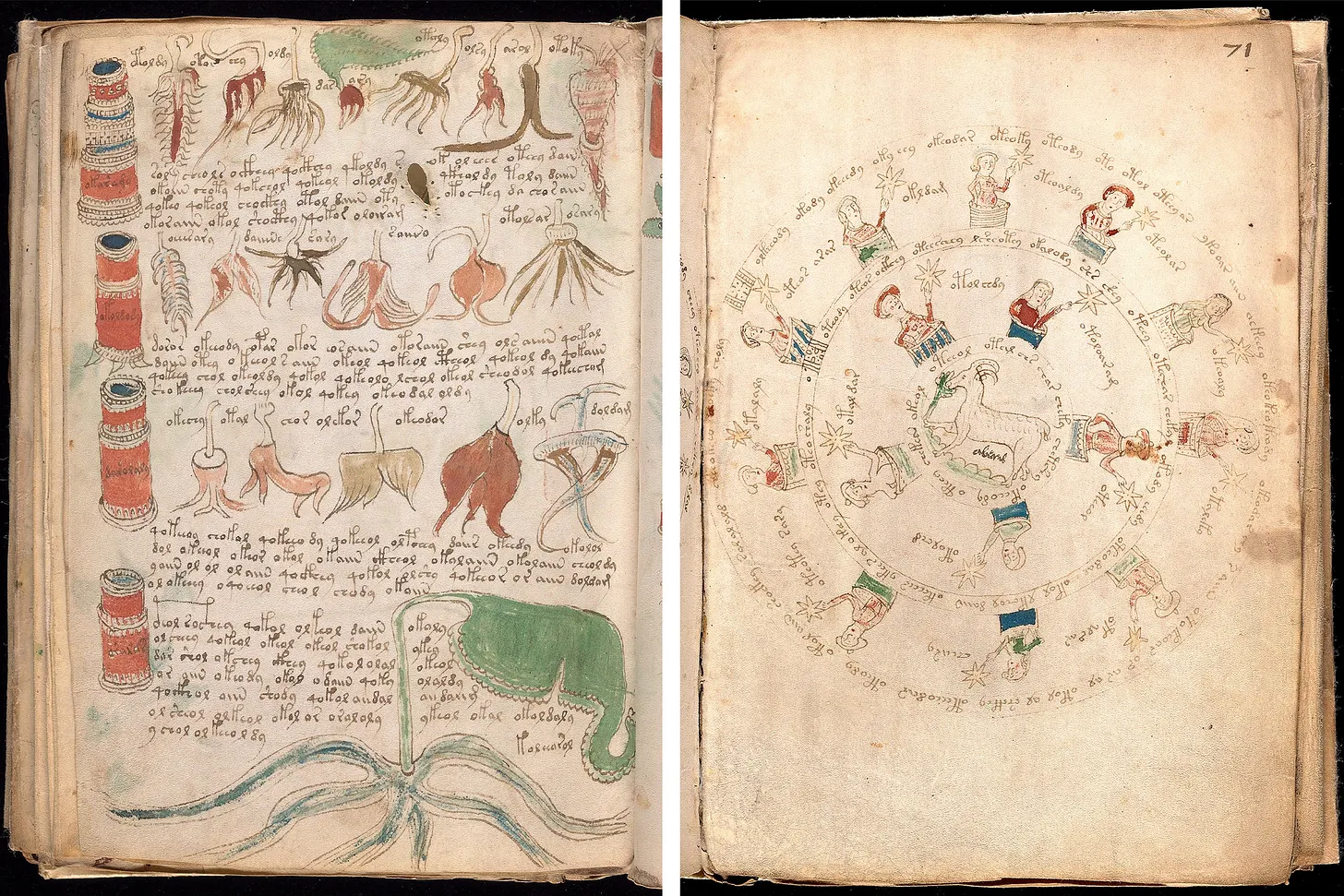
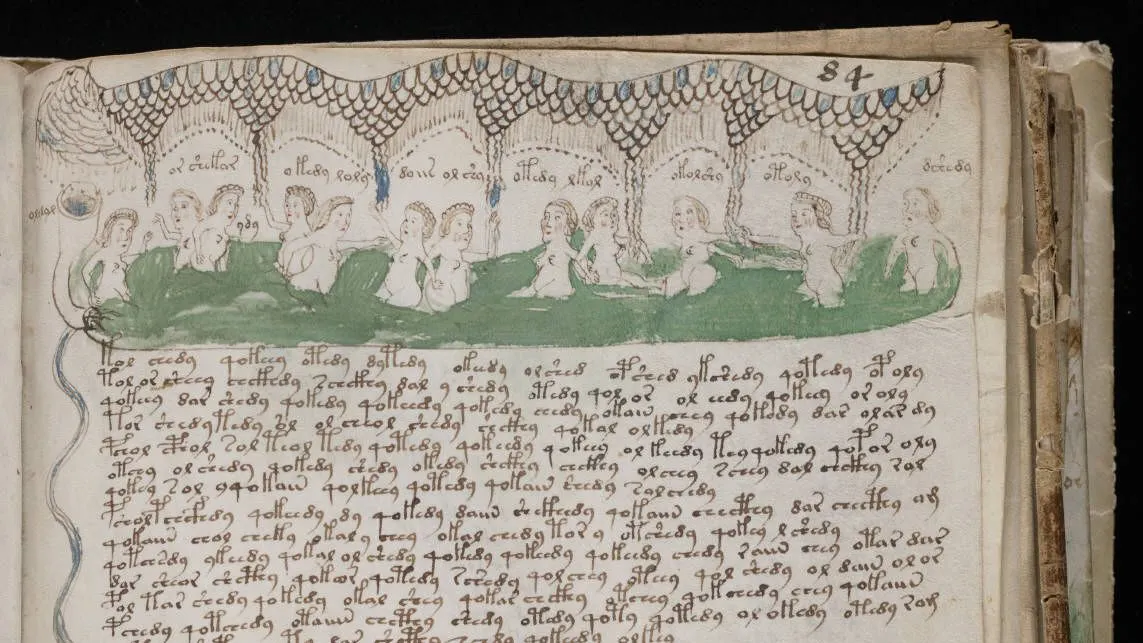
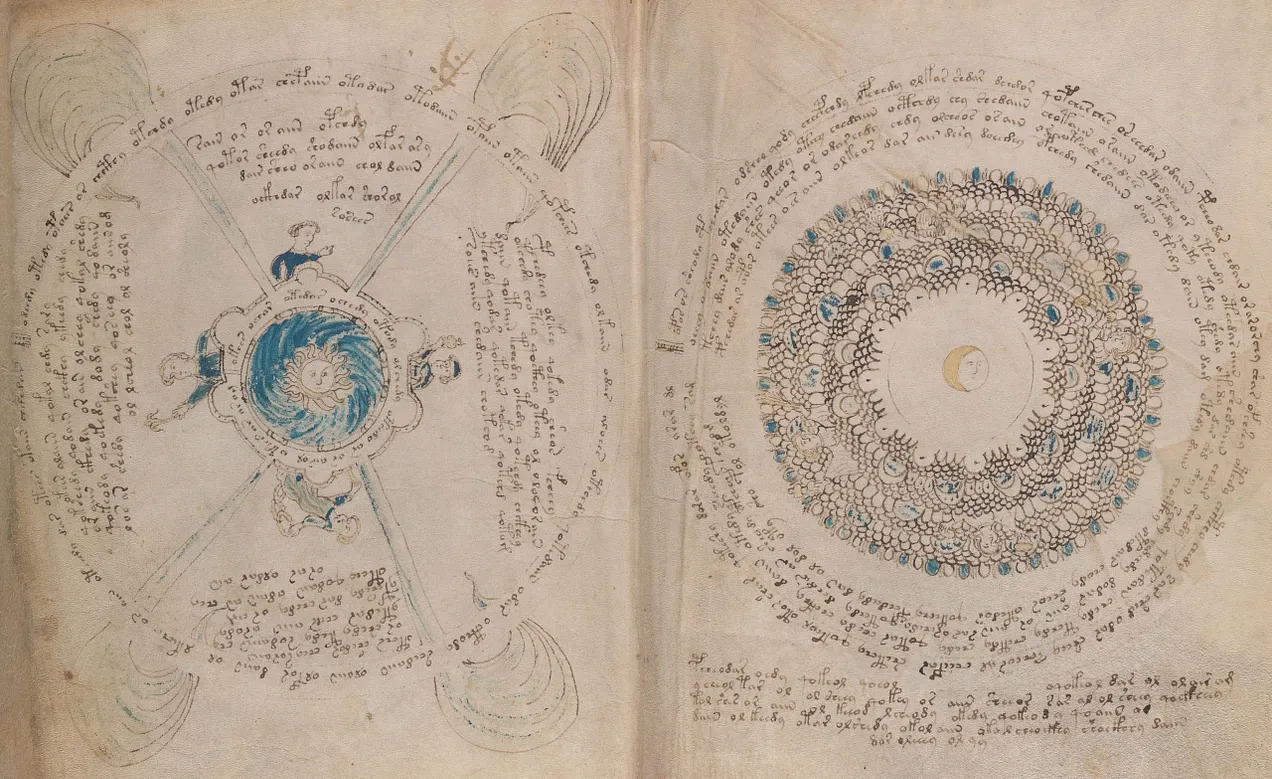
Its illustrations include unidentified plants, stars, planets, women in water and other unusual images that leave researchers wondering what its author intended to convey.
Despite years of study by specialists in different fields, no interpretation has been reliably accepted as correct.
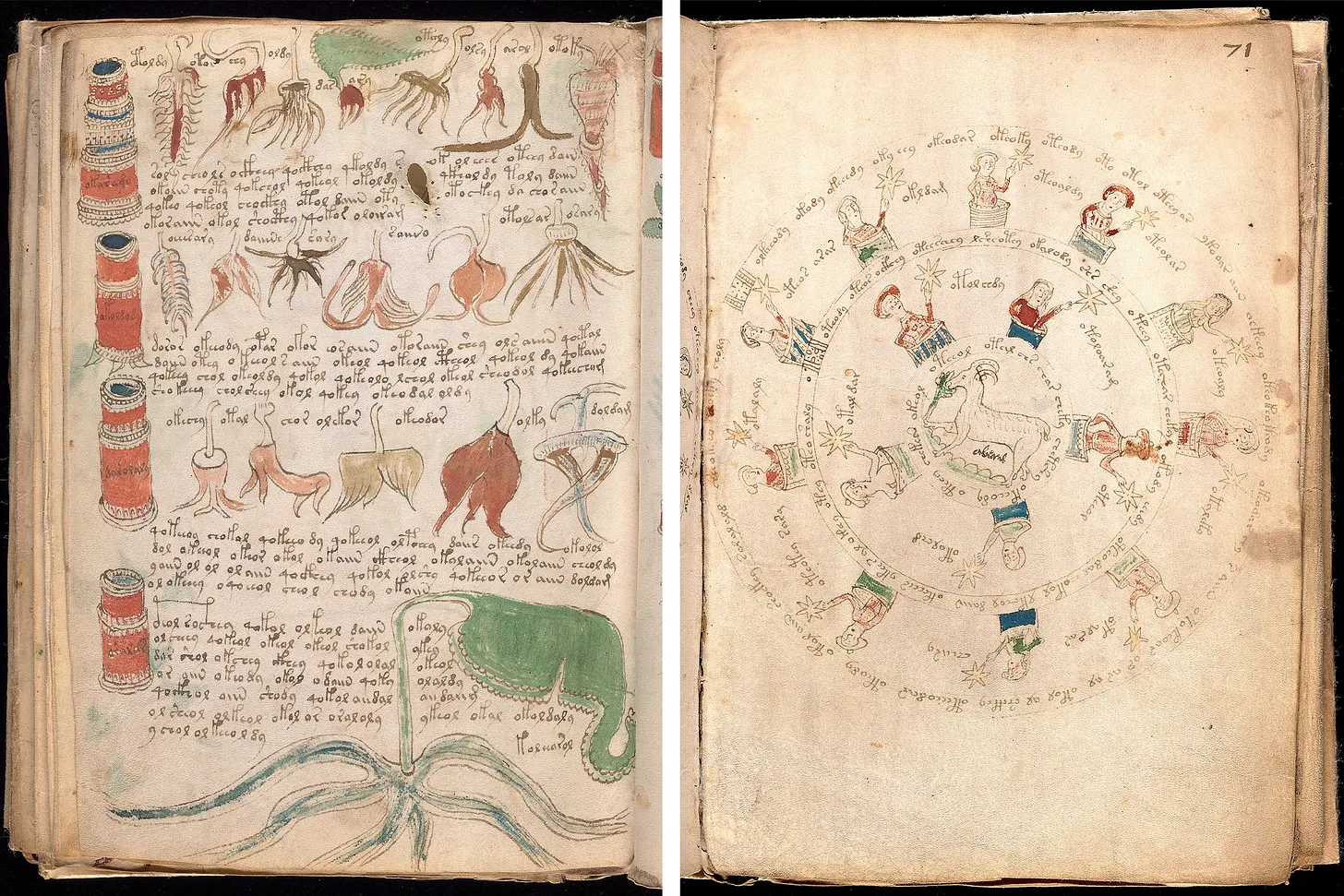
A book written in the 15th century
The Voynich Manuscript was written on vellum, animal skin prepared for use as a writing surface. In 2009, scientists used carbon-14 dating to determine that the skin dated from between 1404 and 1438.
Analysis of the ink and writing materials also found that they were consistent with those used in manuscripts from the Middle Ages. The tests establish the age of the skin, however, not the precise year the text was written or who wrote it.
The book has about 240 pages, though there are signs that some are missing. Others fold out into larger sheets, an unusual feature in many books of the period.
A language that has baffled experts
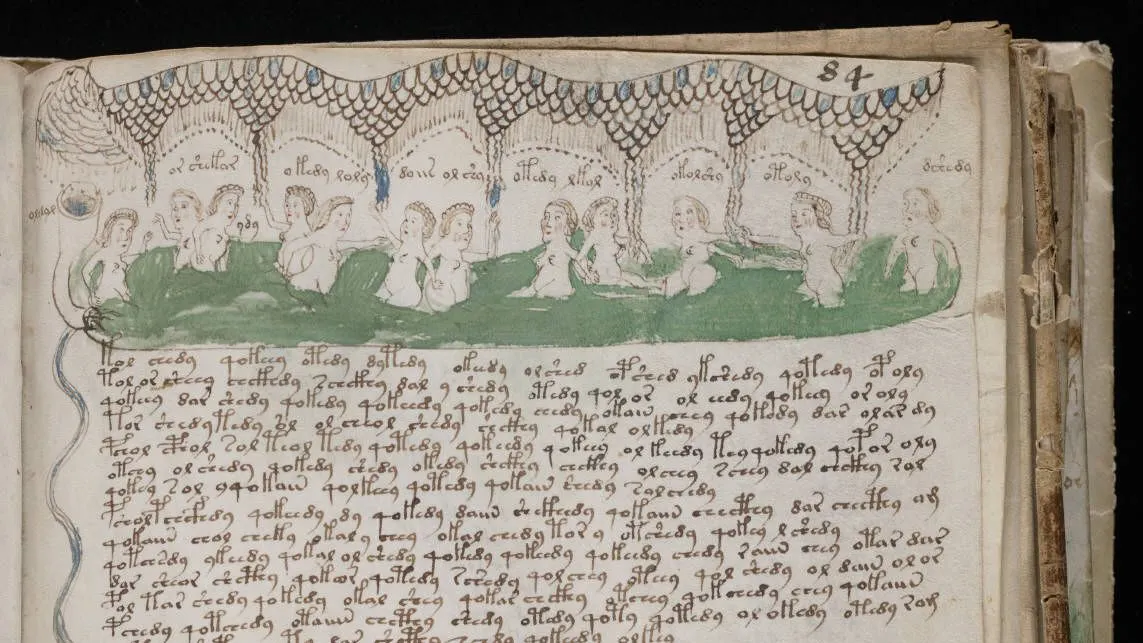
One of the manuscript's enduring mysteries is its text. Its letters and symbols have not been found in any other known writings. The language has been named Voynichese after Wilfrid Voynich, who bought the book from a Jesuit collection near Rome, Italy.
The text appears to consist of words separated by spaces, as in ordinary languages. There is no record establishing whether the symbols represent ordinary words, a code or a specially encrypted text.
A study by Yale University linguists Claire L. Bowern and Luke Lindemann, published in the Annual Review of Linguistics in 2021, found that the Voynich text has some features resembling those of ordinary languages, including word repetition, the structure of its characters and word sequences.
Another study, conducted in 2022 by Vladimír Matlach, Barbora Anna Janečková and Daniel Dostál, analysed the symbols and found that some might be multiple letters joined together or symbols used as a single character.
Research analysing the text also found that the book contains about 37,919 words, including 8,114 distinct word types. This has led some experts to suspect that it is written in an ordinary language concealed through a method of altering the text, while others still doubt that it is a real language.
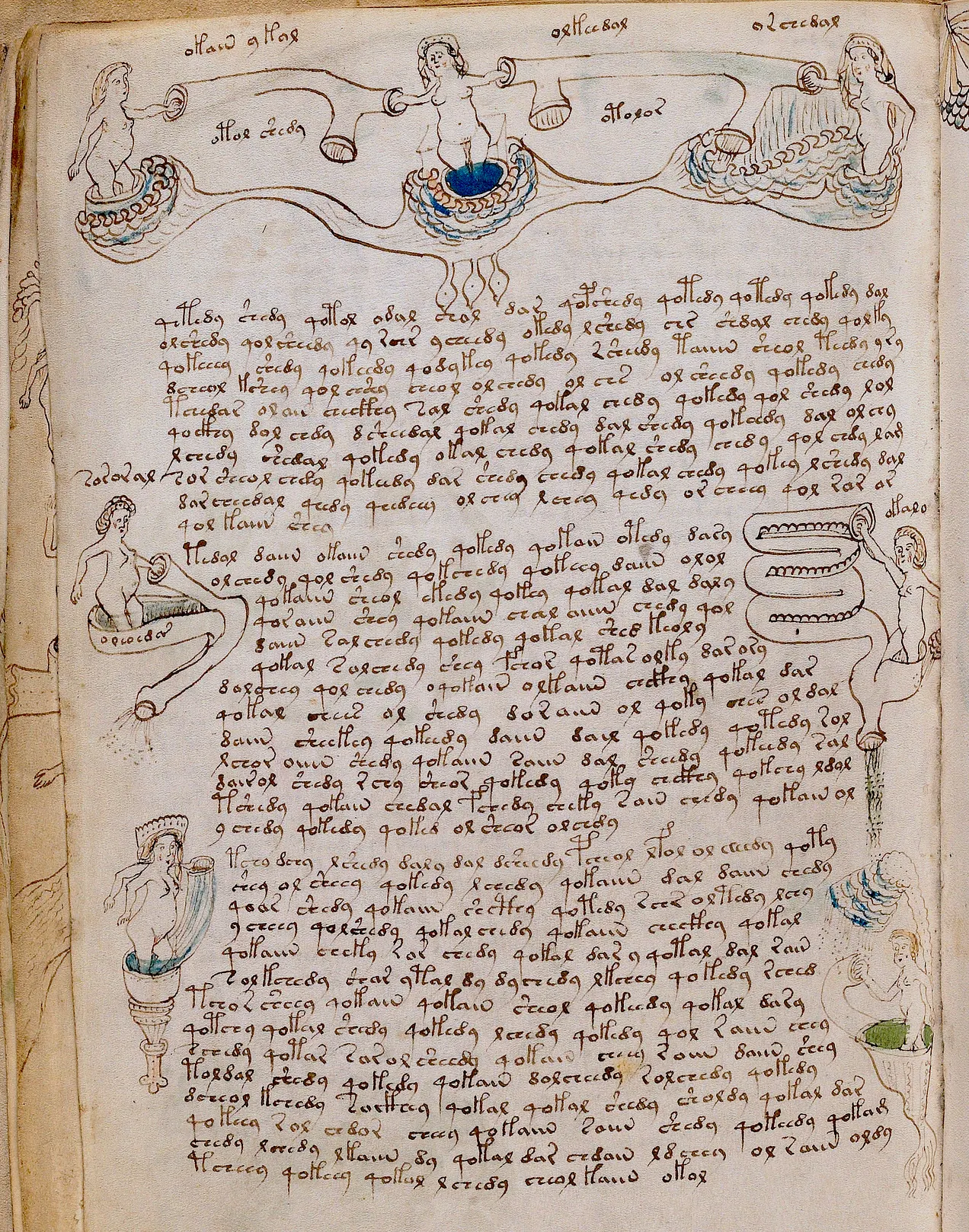
Unknown plants, stars and women in water
The Voynich Manuscript contains more than text. Its many varied illustrations are among the reasons researchers continue to study it.
Analysts have divided its contents into six sections based on the types of illustrations. The first, the Herbal Section, accounts for nearly half the book's pages and contains drawings of about 113 plants in various colours.
Botanists have been unable to identify almost all of them with certainty. Some drawings resemble plants known in Europe, while others appear to combine parts of different plants in ways that do not match ordinary plants found in nature.
The second section contains drawings of stars and planetary and stellar symbols associated with astronomy and astrology. It also includes wheel-like illustrations showing signs of the Zodiac.
The third section is one of those that has drawn particular attention. It depicts many naked women, some in water or pools and others in what look like tanks connected to pipes and other unusual apparatus.
The unconventional images have led some researchers to suspect that they relate to human anatomy, bathing or biological processes. There is, however, no confirmed explanation of what they mean.
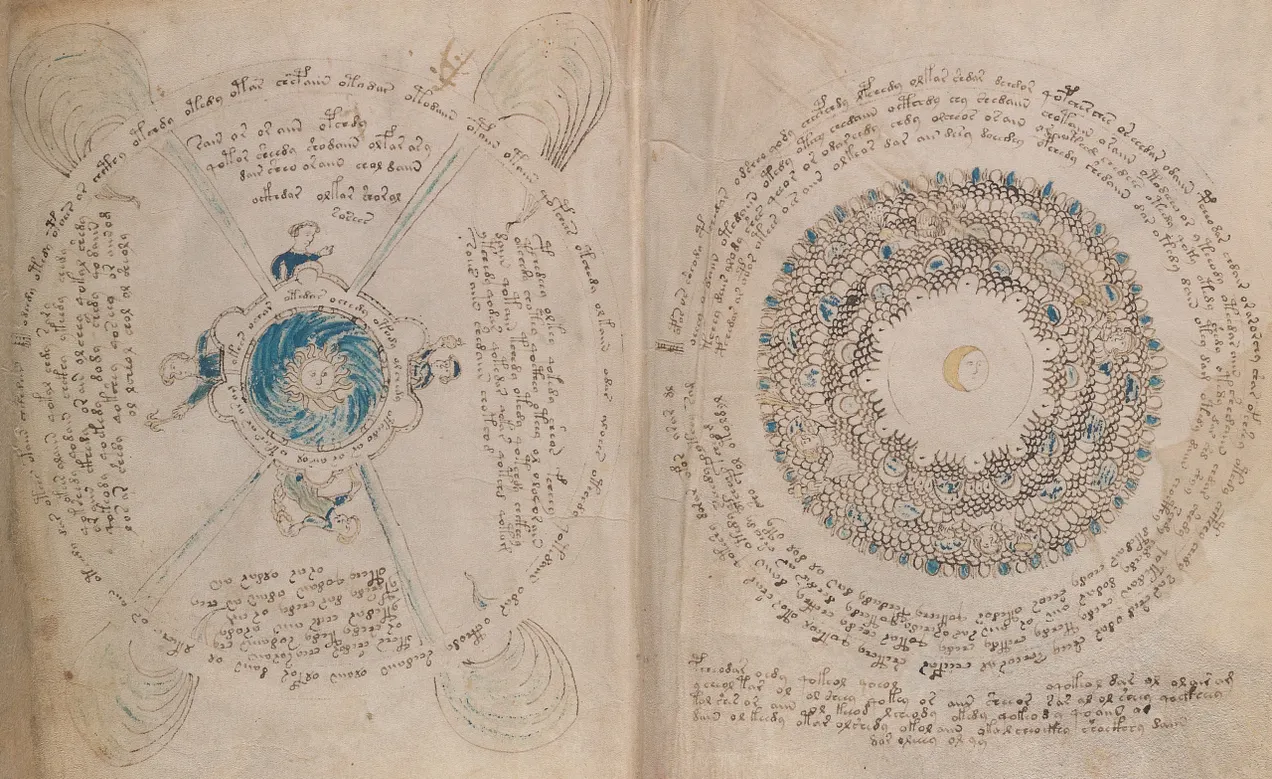
The fourth section, called the Rosette, is a large foldout page showing nine connected sections.
Its illustrations include star-like shapes, buildings, waves, leaves and pipes. Some bear unusual Voynichese text.
The fifth section contains illustrations of medicines and plants with roots. Some parts resemble equipment used to prepare medicines in earlier times.
The final section consists mainly of text, with each passage beginning with a small flower- or star-like image. Researchers suspect it may contain descriptions of procedures or medicines prepared from plants, but this remains uncertain.
Many owners, but no known author
The history of the Voynich Manuscript begins to emerge clearly in records from the 17th century. One of its earliest known owners was Georg Baresch, an alchemist who lived in Prague, in what is now the Czech Republic.
In 1637, Baresch wrote to Athanasius Kircher, a Jesuit scholar living in Rome, asking for help deciphering the unusual text in his possession.
Baresch had spent a long time trying unsuccessfully to understand the book. After his death, it passed to his friend Jan Marek Marci, who also continued to seek an explanation.
Between 1665 and 1666, Marci sent the book to Kircher, writing to ask him to continue trying to determine what it said.
In his letter, Marci said the book had once belonged to Rudolph II, the Holy Roman Emperor, who is said to have bought it for 600 gold coins.
Rudolph II believed it had been written by Roger Bacon, a 13th-century English scholar. That is a claim made in historical accounts, however, and does not establish that Bacon wrote the book.
In 1912, Wilfrid Voynich, a rare-book dealer from Poland, bought the manuscript from a Jesuit collection near Rome, Italy.
The book was later named after him. Voynich spent time trying to decipher its language but failed. In 1915, the manuscript was displayed at an exhibition at the Albright Art Gallery in the United States.
After Voynich's death, the book passed to his wife, Ethel Voynich, and then to Anne Nill, their friend and assistant. In 1961, Nill sold it to dealer H. P. Kraus, who gave it to Yale University's Beinecke Library in 1969.

Theories about the book's meaning
The manuscript's resistance to decipherment has given rise to many theories, but none has been confirmed as the correct answer.
One theory holds that it is written in an ordinary language concealed using a code or a special method of altering the text. Its supporters point to patterns of word repetition, word length and character structure that resemble those found in ordinary languages.
Researchers Claire Bowern and Luke Lindemann also found that the text's structure had much in common with how language works, although that did not enable them to decipher it.
Another theory suggests it was written by people seeking to preserve secret information about alchemy, medicine, the stars or other fields of knowledge of the time.
Some social media users have said it contains information about women's reproductive health, but there is no evidence to substantiate those claims.
Others suspect it is a hoax, created by someone who wanted to make it appear they possessed a book of special knowledge so they could sell it for a high price.
Supporters of that theory say its author may have combined different symbols and images to make it look like a secret book. The structure of the words and how they vary between sections, however, make other researchers doubt that the text is merely meaningless.
Another theory is that it was written by someone who invented a new alphabet and language, or that it is a work of fiction. This, too, lacks evidence.
Experts continue to seek answers
The Voynich Manuscript has been studied by experts in history, languages, literature and codebreaking. They include specialists who worked for American and British intelligence agencies during the First and Second World Wars.
Although some have announced that they found answers or deciphered parts of it, no interpretation has been independently accepted by other researchers.
The book is held at the Beinecke Rare Book and Manuscript Library at Yale University in the United States, under the designation MS 408.
Because the materials on which it was written are vulnerable to damage, the library has restricted opportunities to handle or view it in person.
Images of all its pages are available through Yale's online library, allowing researchers and others interested in the manuscript to examine them.
Some six centuries on, the Voynich Manuscript remains a mystery: who wrote it, what language was used and what message it was intended to convey are still unanswered questions.