Through
the support of the ACCESS Project (African
Center for Career Enhancement and Skills Support), students are empowered
to transform their innovative ideas into functional prototypes, putting their
knowledge into practice, developing solutions to real-world challenges, and
preparing for successful careers as entrepreneurs and innovators.
Three
student-led projects—Vision Bridge, AGRI
ATLAS, and the Intelligent Solar Cooking System—demonstrate how
interdisciplinary learning at INES Ruhengeri empowers young innovators to
transform personal experiences, academic knowledge, and technological skills
into impactful solutions for communities.
Developed
by students from Computer Science, Food Biotechnology, Software Engineering,
Industrial Information Technology, and Electrical Engineering, these projects
reflect the institution's commitment to applied learning and innovation for
sustainable development.
Apply
to study at INES [https://digitalcampus.ines.ac.rw/admission]
Vision Bridge:
Restoring Confidence and Independence for the Visually Impaired
For
three Computer Science students, innovation began with a deeply personal story.
Ahmed
Adil Saleh Ali, Adoke Abdulrasheed, and Mohamed Abdelaltief all share a similar
experience: each has a close family member living with blindness. Ahmed's
father, Adoke's aunt, and Mohamed's uncle have inspired the three students to
think beyond the classroom and create a technological solution that could
improve the lives of people with visual impairments.
The
result is Vision Bridge, an
intelligent assistive solution designed to improve mobility, safety, and
independence for visually impaired individuals.
Vision
Bridge provides real-time obstacle detection and clear audio guidance, enabling
users to move safely while remaining aware of surrounding environmental sounds
such as conversations, traffic, and other important cues. The system also
features an intelligent voice assistant capable of describing nearby objects,
interpreting the surrounding environment, and providing navigation support
whenever needed.
To
enhance user safety, the project incorporates an emergency support feature that
enables users to instantly notify trusted family members or caregivers whenever
assistance is required. A companion mobile application further strengthens
communication by allowing users to personalize system settings while enabling
caregivers to receive alerts and activity updates.
The
innovation has already received national recognition, earning Second Place in the National Hult Prize Competition,
demonstrating its potential to improve the quality of life for thousands of
visually impaired people.
More
than a technological innovation, Vision Bridge represents compassion
transformed into practical action—a solution born from personal experience and
driven by a desire to restore dignity, confidence, and independence.
AGRI ATLAS: Smart
Agriculture for Food Security
Agriculture
remains one of Africa's greatest opportunities, but farmers continue to face
challenges ranging from crop diseases and inefficient fertilizer use to
post-harvest losses. Four INES Ruhengeri students decided to tackle these
challenges by combining expertise from different disciplines.
AGRI ATLAS was
developed by Divine Umutesi, Aime Kevine Isange Sebageni, Devotha Tuyisingize,
and Jesus Johnson, bringing together students from Food Biotechnology, Software
Engineering, and Industrial Information Technology.
The
project is an Artificial Intelligence-powered smart agriculture and food
management system that supports the entire agricultural value chain—from crop
production to post-harvest storage.
During
cultivation, AGRI ATLAS continuously monitors crop growth, analyzes plant
health, detects pests and diseases at an early stage, and identifies abnormal
conditions that could reduce productivity. Using intelligent data analysis, the
platform provides timely recommendations, enabling farmers to intervene before
problems become severe. It also promotes efficient fertilizer management by
analyzing soil and crop conditions to recommend optimal fertilizer application,
reducing costs while supporting sustainable farming.
Beyond
the field, the system safeguards harvested produce by monitoring storage
conditions such as temperature, humidity, and air quality. It detects early
signs of spoilage, predicts the remaining shelf life of stored products, and
supports informed decisions on transportation, marketing, and sales planning.
AGRI
ATLAS also integrates smart automation technologies including environmental
control systems, ventilation management, UV-C disinfection, and storage
security monitoring to create safer and more efficient food storage
environments.
Speaking
about the project, Divine Umutesi explained the team's motivation:
"As
a student of Biotechnology, I wanted to create a system that provides a
solution to food insecurity. But I can't do everything alone, so I collaborated
with students from other disciplines to combine our skills and innovation. We
hope people will appreciate our project and invest in it."
By
combining artificial intelligence, biotechnology, automation, and software
development, AGRI ATLAS demonstrates the power of interdisciplinary
collaboration in addressing one of the world's most pressing challenges—food
security.
Intelligent Solar
Cooking System: Advancing Clean Energy for Sustainable Living
Renewable
energy offers enormous opportunities to improve livelihoods while
protecting
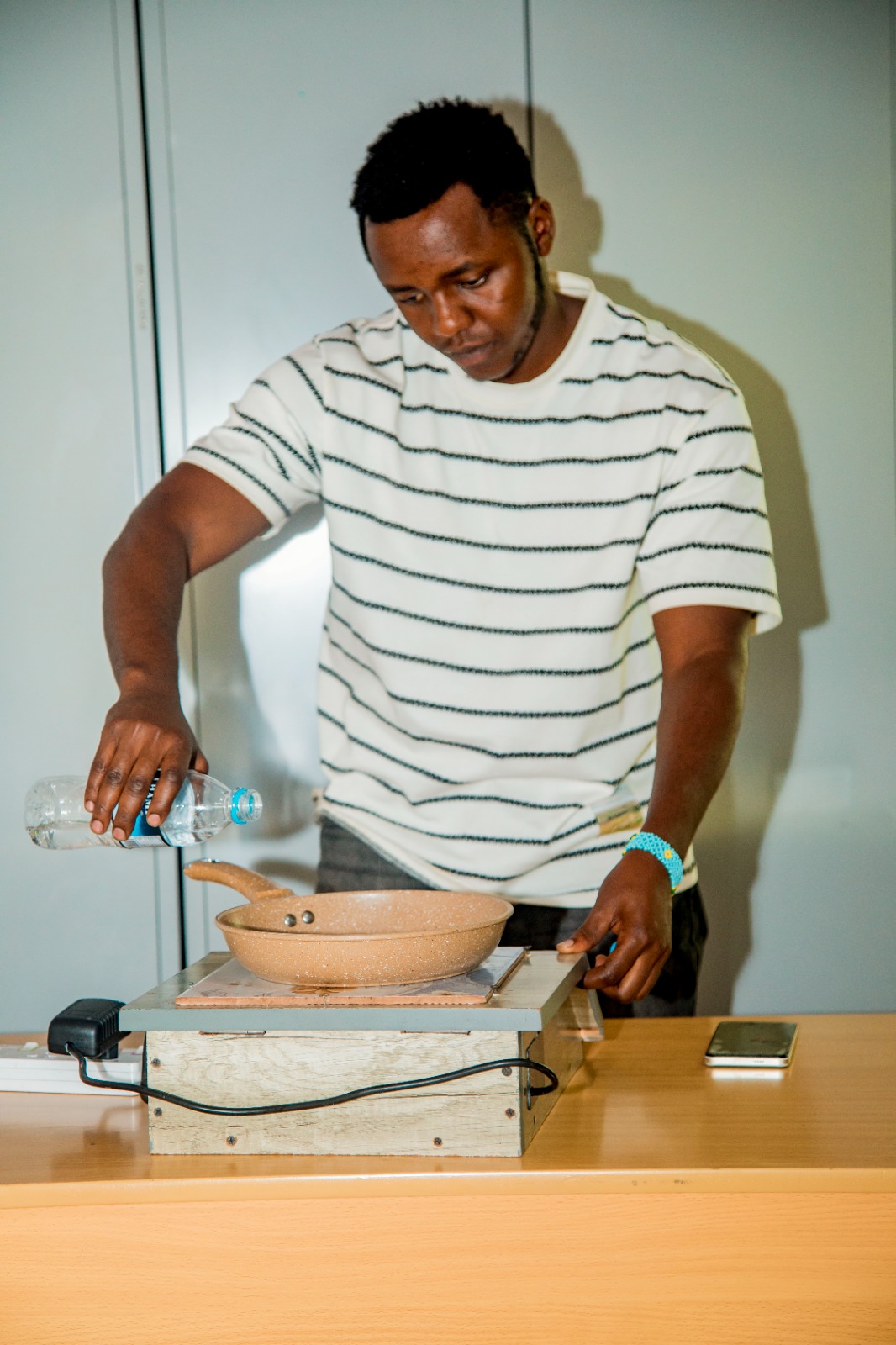
the environment. Inspired by this vision, Eric Uwizeyimana, a third-year
Electrical Engineering student at INES Ruhengeri, developed the Intelligent Solar Cooking System.
The
project provides a clean, affordable, and environmentally friendly alternative
to traditional cooking methods that rely on firewood, charcoal, and other
conventional fuels.
Designed
for both rural and urban communities, the Intelligent Solar Cooking System
enables households to prepare meals efficiently while reducing dependence on
non-renewable energy sources. By minimizing exposure to harmful cooking smoke,
the system contributes to healthier living conditions while reducing the
environmental impacts associated with deforestation and greenhouse gas
emissions.
The
innovation is designed to support reliable cooking even under changing weather
conditions, making it suitable for households, schools, community facilities,
and small businesses. Through intelligent energy management and efficient solar
utilization, the project promotes renewable energy adoption while helping
families reduce cooking costs.
Eric's
innovation reflects how engineering knowledge can be transformed into practical
technologies that support environmental conservation, improve public health,
and expand access to sustainable energy solutions.
Innovation with
Purpose
These
three projects illustrate the educational philosophy of INES Ruhengeri—learning
that extends beyond academic achievement to create meaningful impact within
communities.
Whether
improving the independence of visually impaired individuals, strengthening food
security through smart agriculture, or promoting clean energy solutions for
sustainable living, INES Ruhengeri students are applying classroom knowledge to
solve real-world challenges.
By
fostering innovation, interdisciplinary collaboration, entrepreneurship, and
community engagement, INES Ruhengeri continues to nurture graduates who are not
only skilled professionals but also solution-driven innovators committed to
transforming society through science, technology, and creativity.
Empowering
Students to Solve Real-World Challenges
According
to Dr. François Xavier Niyibizi,
ACCESS Project Coordinator at INES Ruhengeri, these innovations reflect the
university's commitment to preparing students for the demands of today's world
through practical learning and innovation.
"At
INES Ruhengeri, through the ACCESS Project, we train students and empower them
with practical skills that enable them to develop solutions to real-world
challenges. Our goal is to ensure that students graduate with the essential
competencies required by the labour market."
He
explained that the university's Innovation
Center serves as a hub where students transform ideas into practical
innovations.
"We
invite students to join our Innovation Center, where they acquire hands-on
skills and receive mentorship to transform their ideas into impactful
solutions. Through the ACCESS Project, we also provide financial support to
selected innovative projects to help students develop and refine their
innovations."
As
an Institute of Applied Sciences, INES Ruhengeri continuously invests in
experiential learning, innovation, research, and entrepreneurship to ensure that
students graduate with the practical skills demanded by employers and society.
Through initiatives such as the ACCESS Project and the Innovation Center,
students are encouraged to identify community challenges, collaborate across
disciplines, and develop sustainable solutions with real-world impact.
Currently,
INES Ruhengeri is home to 8,253 students,
including 1,670 international students
from 22 nationalities, creating a diverse academic community where
innovation, collaboration, and global perspectives thrive.
The
success of Vision Bridge, AGRI ATLAS,
and the Intelligent Solar Cooking System
demonstrates that when students are empowered with practical education,
mentorship, and institutional support, they become innovators capable of
improving lives, advancing sustainable development, and shaping a better future
for their communities and beyond.
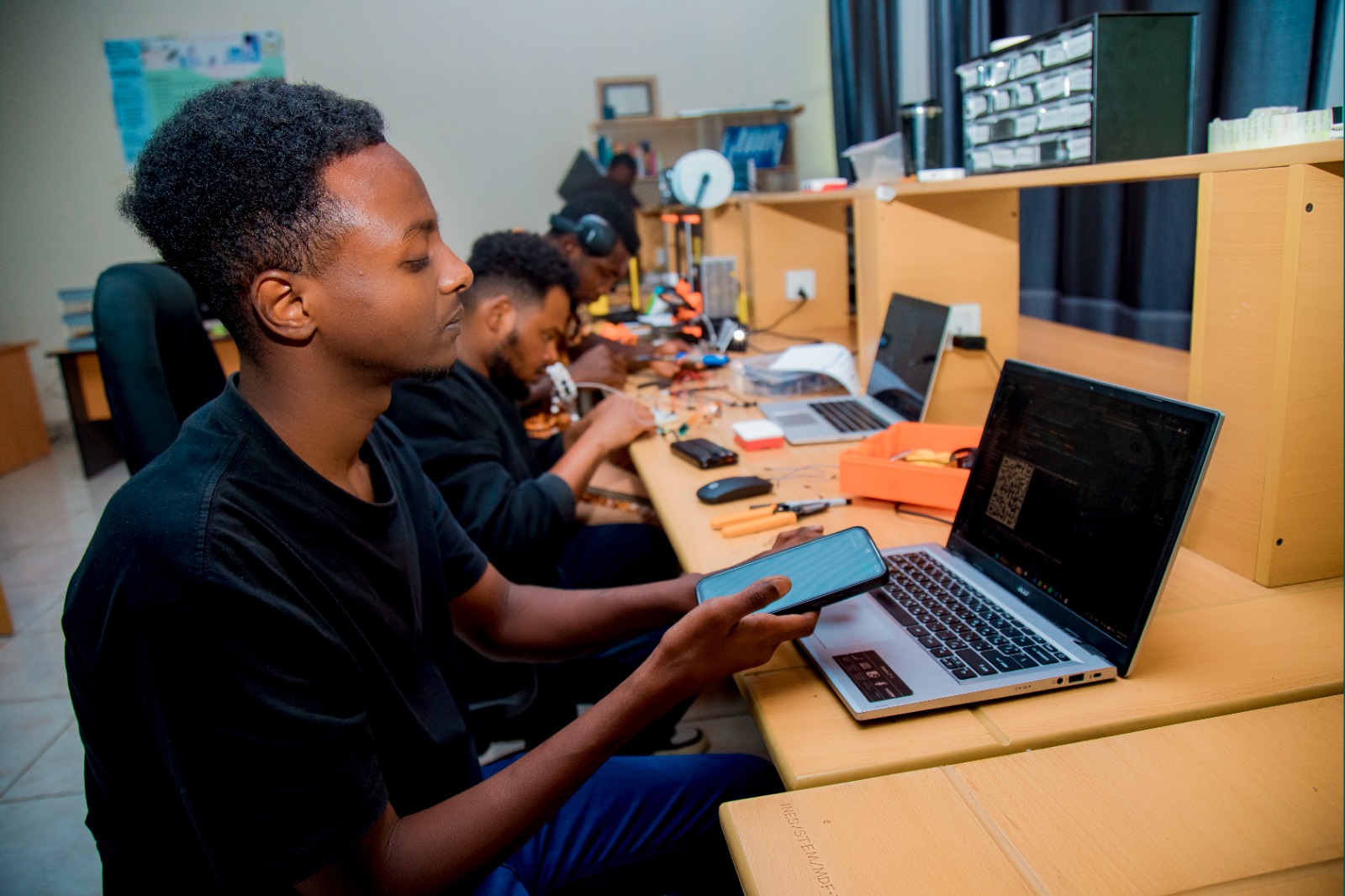
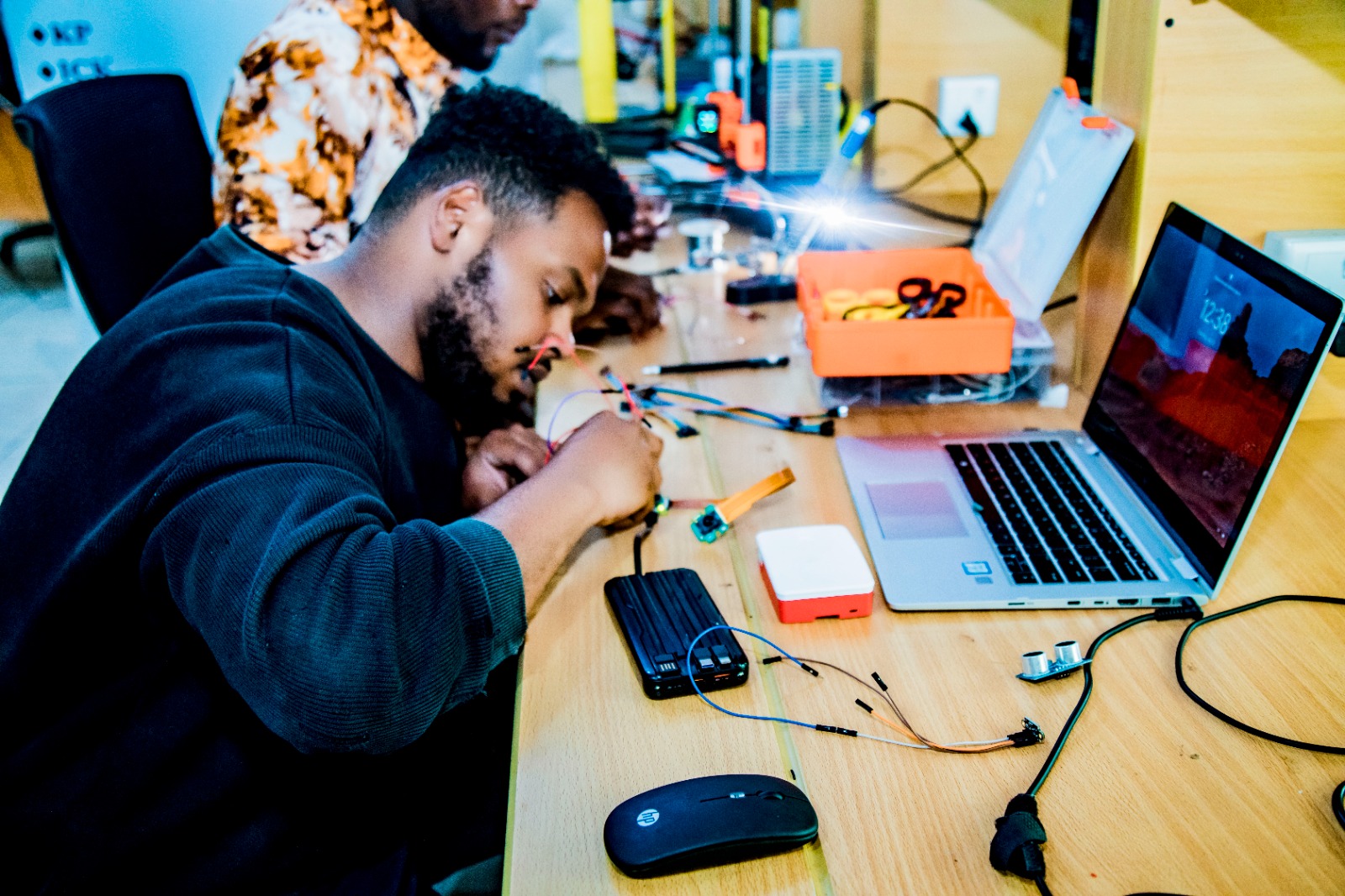
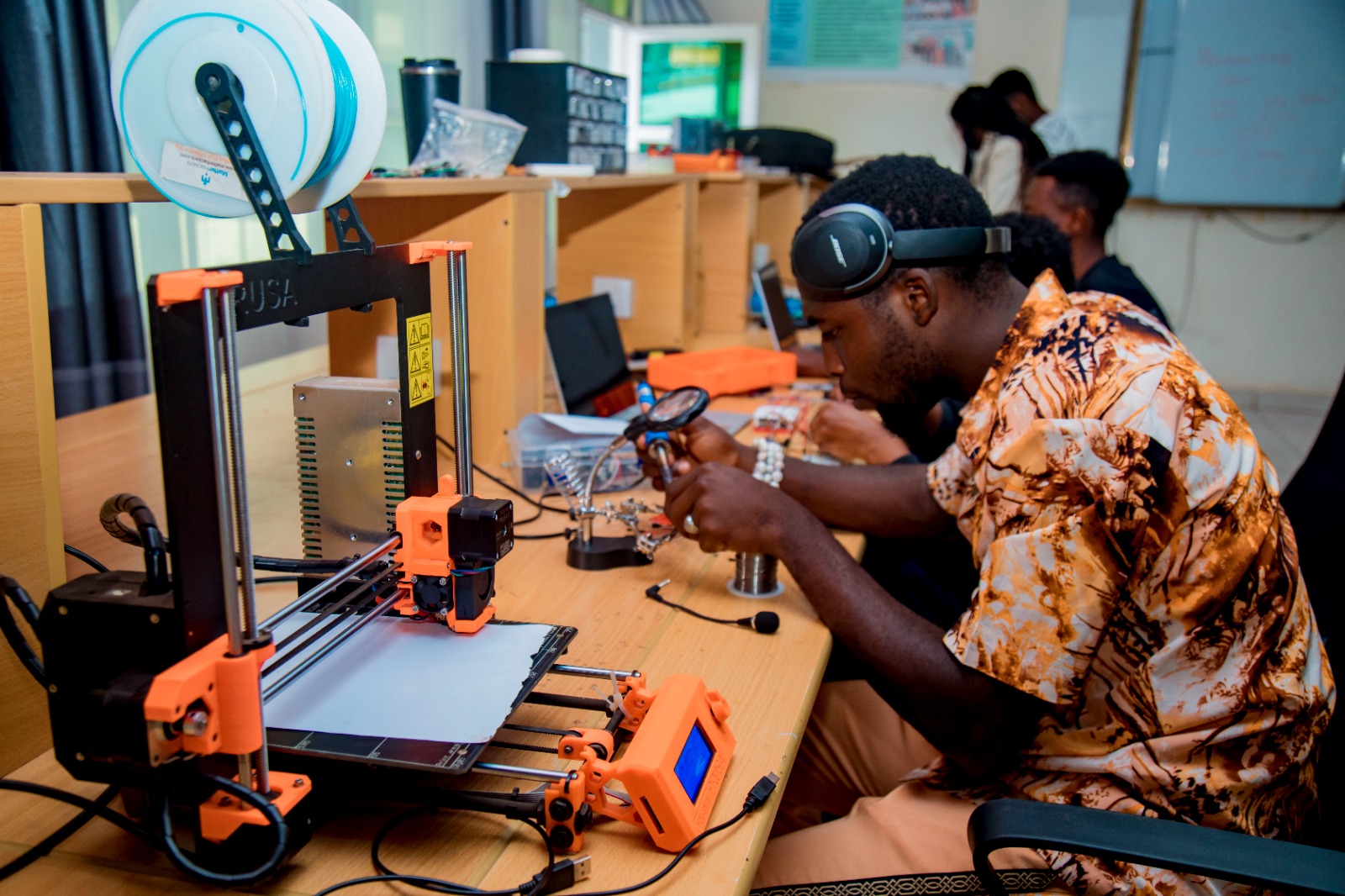
Ahmed, Mohamed and Adoke while working on their project named "Vison Bridge
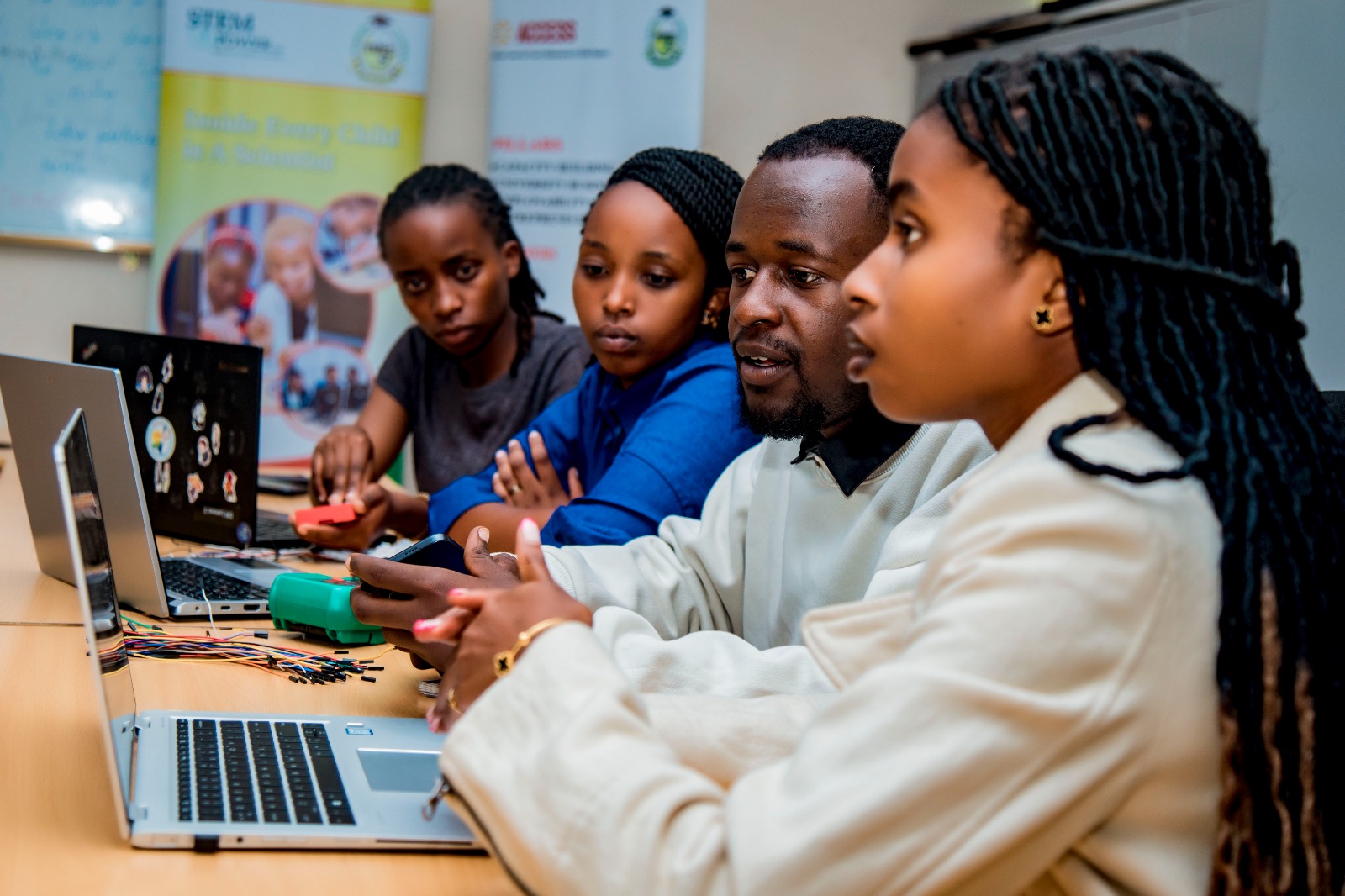
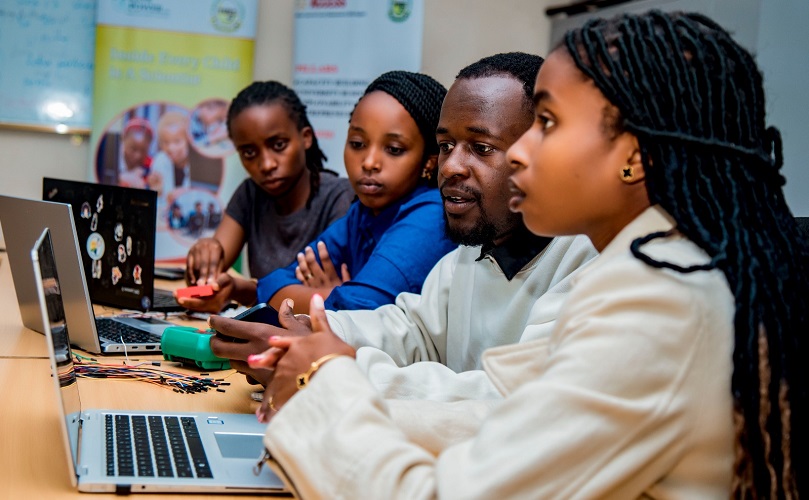
The INES Ruhengeri's Devotha, Johnson, Divine and Aime Kevine discusses the ongoing progress of their project
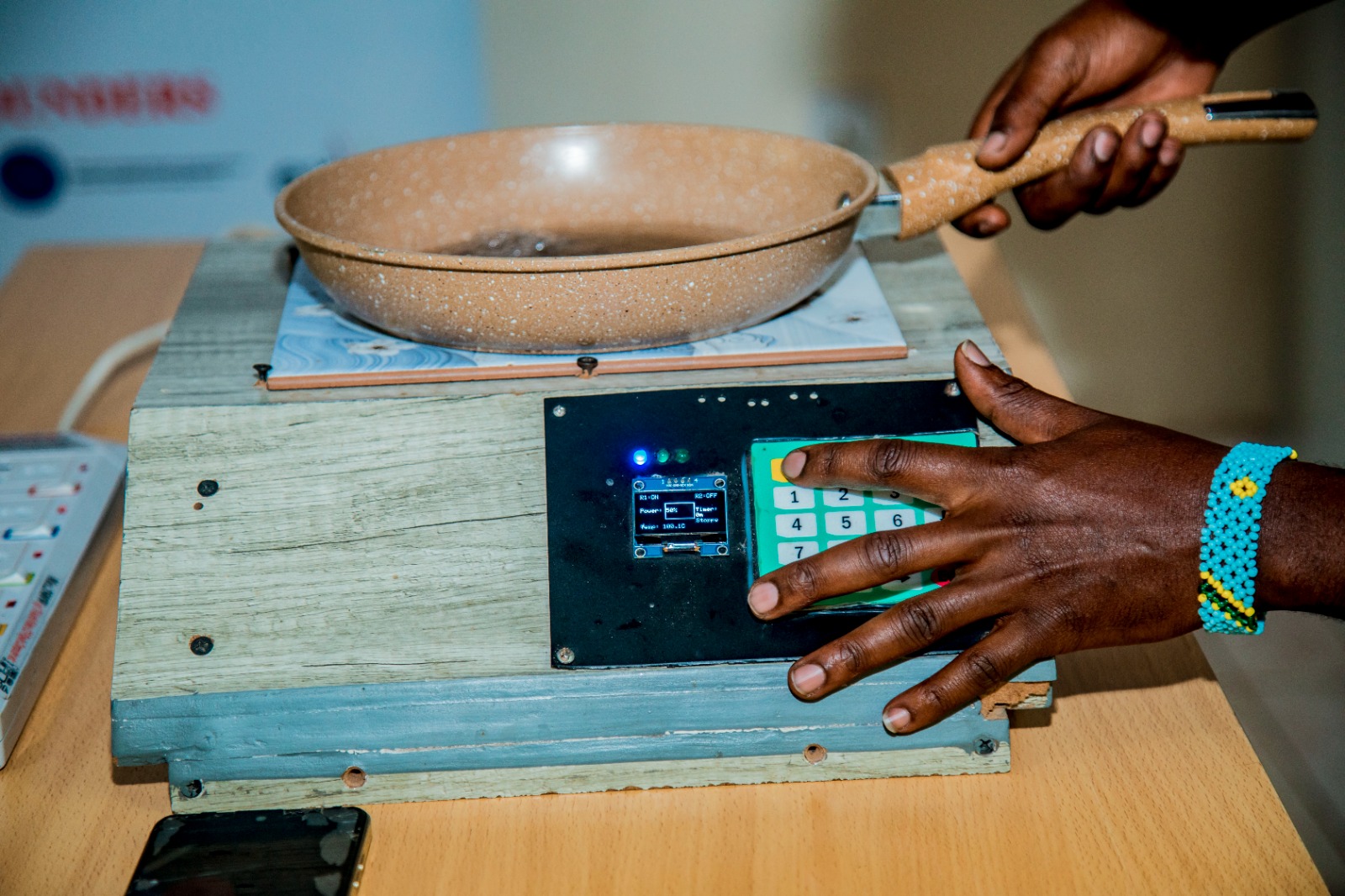
The hybrid solar cooking system developed by Eric Uwizeyimana demonstrates how engineering students at INES Ruhengeri are creating innovative renewable energy solutions for communities