
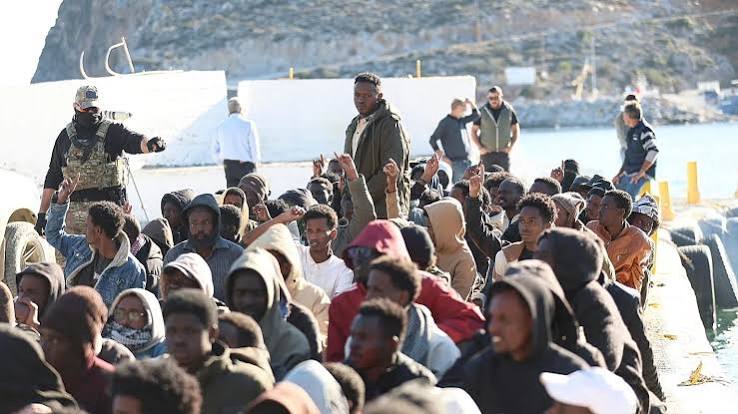
Germany, Austria, Greece, Denmark and the Netherlands are preparing to announce the plan at a meeting in Vienna, Austria, Reuters reported on November 16, 2026. Rwanda is expected to receive the migrants.
The plan is part of a new approach European countries want to use to reduce irregular migration into the continent and speed up the return of people who have no right to stay.
Known as Return Hubs, the scheme would involve centres set up by European countries, or in cooperation with countries outside the EU, to receive people ordered to leave Europe.
For example, a person might leave their country for Germany, Austria or another EU country and seek asylum, saying they cannot return home because their life could be at risk.
That country must then examine the application and determine whether the person has valid grounds for asylum.
If the person does not qualify, the country can order them to leave its territory. The applicant has the right to appeal and use all legal avenues to have the decision reviewed.
If all appeals have been exhausted and the return decision upheld, but obstacles prevent the person from being sent home, European countries want to send them to another country outside Europe. Rwanda could serve as a hub for such migrants.
Instead of continuing to accommodate people with no right to stay, European countries would send them to centres in other countries while arrangements are made to return them home or other legal decisions are taken.
People sent to a centre would not automatically be granted the right to live permanently in Rwanda. How long they would stay, how they would be cared for and how they would be returned home are among the details to be set out in agreements between the countries concerned.
Why have the countries chosen Rwanda?
For years, Rwanda has expressed willingness to work with Western countries to receive people they no longer want on their territory. That has brought Rwanda into discussions about how wealthy countries could cooperate with others to manage migration challenges.
In 2022, Rwanda and the United Kingdom agreed to send some migrants and asylum seekers who had reached British soil to Rwanda. The plan was never implemented as intended because, in 2023, the UK Supreme Court ruled that sending them to Rwanda was unlawful, citing concerns about their safety and how their asylum claims would be handled.
After the UK halted the scheme, Rwanda sought £50 million, or about $63.6 million, as the cost of the suspended agreement.
The United States has also struck an agreement with Rwanda to receive some migrants from its territory. Reuters reported that the US began sending migrants to Rwanda in 2025 under an agreement allowing for the transfer of up to 250 people.
This shows that Rwanda has for some time expressed willingness to help address migration challenges, although such agreements have continued to spark debate among human rights organisations.
How does the new plan differ from the UK scheme?
There is a significant difference between the UK's agreement with Rwanda and the plan being developed by the five European countries.
Under the UK scheme, some asylum seekers could have been sent to Rwanda while their applications were still being considered, before a final decision on their claims.
That was among the main reasons the UK Supreme Court found the scheme unlawful.
The five countries' new plan, by contrast, will focus on people who have exhausted all legal avenues and received a final decision that they have no right to stay in the EU.
That means the plan is not intended for people still awaiting an asylum decision or exercising their right to appeal, according to Reuters.
New EU rules also provide that unaccompanied children are excluded from agreements to send people to centres outside Europe.
New European rules paved the way for the plan
On October 1, 2026, the Council of the European Union gave final approval to new rules governing how countries return people with no right to remain on their territory.
The rules are known as the Returns Regulation. Before the rules were revised, European countries faced difficulties coordinating decisions and returning people who had no right to live there.
The EU says nearly two in three people ordered to leave the bloc do not do so as expected.
Some people do not comply with return decisions, while others have no country willing to receive them, leaving them in Europe.
The new rules aim to speed up the process, make cooperation between countries easier and ensure that migrant return decisions can be recognised and enforced in other EU countries.
They also allow EU countries to make agreements with non-EU countries to establish centres for people ordered to leave Europe.
Those agreements must be with countries that respect international human rights standards, including the principle of not sending someone to a country where they could face persecution or serious danger.
European countries therefore say the scheme must comply with their own laws and international law.
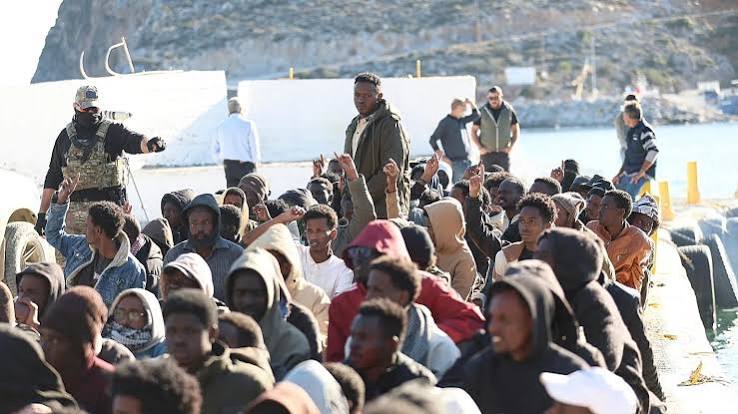
Five European countries, including Germany, Austria, Greece, Denmark and the Netherlands, are preparing to announce a plan to send rejected asylum seekers to Rwanda after they have exhausted all legal avenues.