

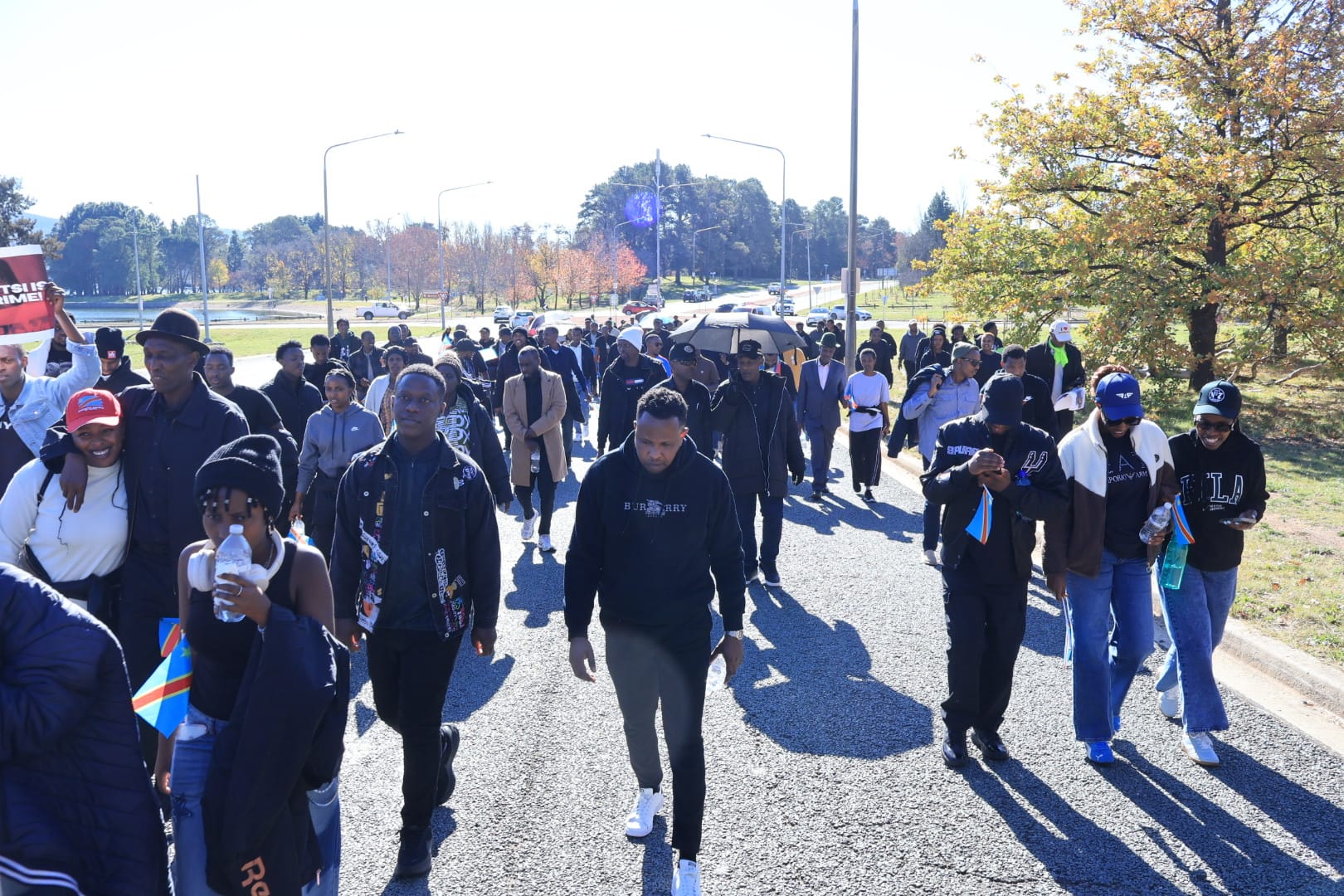
The protest took place on Friday, May 29, 2026, in Canberra, Australia’s capital city. It was organized by the Banyamulenge Congolese Community of Australia (BCCA) in collaboration with a group representing Congolese Tutsi communities originating from North Kivu and living in Australia.
Protesters gathered near the Australian Parliament before marching to the diplomatic offices representing the United States, China, and Belgium. The demonstration began at around 10:00 a.m. and concluded at approximately 3:00 p.m.
Speaking to InyaRwanda, Chris Nkunda, a BCCA official responsible for finance and administration, said the main purpose of the protest was to draw international attention to what participants described as ongoing insecurity, violence, and targeted attacks against Banyamulenge and other Kinyarwanda-speaking Congolese communities in eastern DRC.
According to the organizers, more than 300 people from different Australian states participated in the demonstration. Protesters carried banners and chanted messages calling for peace, justice, and protection for vulnerable communities in eastern Congo.
“We call on the government of Congo to stop the killings being committed against our people,” Nkunda said. “We also appeal to the international community not to remain silent while the Banyamulenge community continues to suffer.”
The situation of the Banyamulenge has been a long-standing issue in eastern Congo, particularly in the territories of Minembwe, Fizi, and Uvira. Community members argue that they have faced discrimination, attacks, killings, and displacement because of their ethnic background, their use of the Kinyarwanda language, and recurring disputes surrounding their citizenship and identity.
Historians and political analysts often link the crisis to a complex combination of historical grievances, land disputes, questions of nationality, and decades of insecurity that have affected eastern DRC. Banyamulenge leaders maintain that their communities have lived in the region for generations, yet they continue to be treated as outsiders by some groups.
Banyamulenge communities living in different parts of the world have repeatedly organized demonstrations and advocacy campaigns seeking international attention to their plight. They express concern over attacks by armed groups operating in eastern Congo, which they say have resulted in deaths, destruction of property, cattle theft, and the displacement of thousands of civilians.
Reports indicate that many Banyamulenge families have been forced to flee their homes and seek refuge in displacement camps or neighboring countries. Community leaders say that losing access to their land, facing repeated violence, and being forced from their homes remain some of the most painful challenges affecting their people.
The protesters called on the United Nations, the African Union, and major world powers to closely monitor the security situation in areas inhabited by Banyamulenge communities and to pressure all parties involved to end the violence and human rights abuses.
The demonstration comes at a time when insecurity in eastern DRC remains a major concern, with ongoing armed conflicts continuing to affect civilian populations. Protest organizers said they hope their message will encourage international actors to take stronger action toward protecting vulnerable communities and promoting a lasting peace in the region.


“We call on the government of Congo to stop the killings being committed against our people,” Nkunda said